Contour & Highlight: 2025 Trends for Your Face Shape
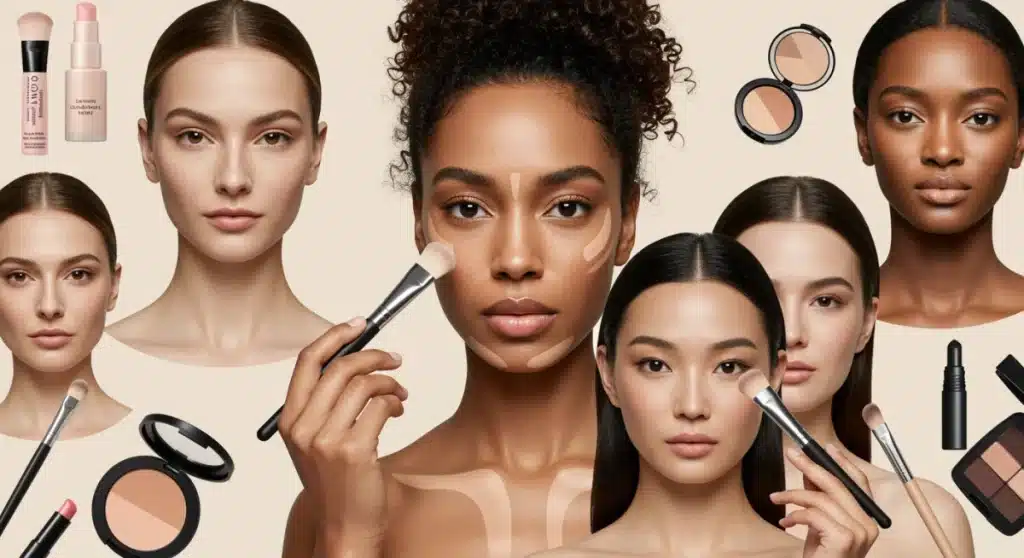
To master contouring and highlighting, identify your face shape and then apply products strategically to enhance your natural features, following 2025 trends for a sculpted and radiant finish.
Welcome to the ultimate guide on how to contour and highlight for your face shape: a step-by-step tutorial for 2025 trends. This essential makeup technique, when executed correctly, can dramatically enhance your natural features, giving your face more definition and radiance. As beauty trends evolve, mastering contouring and highlighting specific to your unique facial structure remains a timeless skill, transforming your look from subtle enhancement to striking glamor. Let’s delve into the art and science of sculpting your features for the modern era.
Understanding your face shape: the foundation of perfect contour
Before you even pick up a brush, the most crucial step in achieving a flawless contoured and highlighted look is accurately identifying your face shape. This foundational knowledge will dictate where to apply your products for the most flattering results. Forget one-size-fits-all approaches; 2025 trends emphasize personalized beauty, starting with understanding your unique canvas.
Determining your face shape isn’t just about guessing; it involves observing key features and proportions. Stand in front of a mirror with your hair pulled back and trace the outline of your face with a washable marker or lipstick. Pay attention to your hairline, jawline, and the widest part of your face. This simple exercise can reveal whether you have an oval, round, square, heart, or long face shape, each requiring a tailored approach to contouring and highlighting.
Key characteristics of face shapes
- Oval: Forehead slightly wider than the chin, high cheekbones, and a gently tapering jawline. This shape is often considered the most balanced, offering versatility in makeup application.
- Round: Characterized by soft curves, a wide hairline, and a full chin. The width and length of a round face are roughly equal, lacking sharp angles.
- Square: Features a strong, angular jawline, a broad forehead, and minimal tapering from the temples to the jaw. The width and length are similar.
- Heart: A wider forehead that tapers down to a narrow, often pointed, chin. High cheekbones are also a common characteristic of this shape.
- Long/Oblong: Longer than it is wide, with a narrow chin and forehead, and often a straight jawline. This face shape can sometimes appear elongated.
Once you’ve identified your face shape, you’re ready to move on to selecting the right products and understanding the basic principles of contouring and highlighting that will best suit your features. This personalized approach ensures that your makeup enhances, rather than hides, your natural beauty, aligning perfectly with the evolving emphasis on authenticity in 2025 beauty standards.
Choosing the right products: creams, powders, and tools for 2025
The beauty market in 2025 offers an abundance of contour and highlight products, each designed to achieve specific effects and cater to various skin types. Selecting the right formulas and tools is just as important as knowing where to apply them. The goal is to create a seamless, natural-looking sculpt that blends effortlessly into your skin, rather than sitting heavily on top.
For contouring, you generally want a product that is two to three shades darker than your natural skin tone, with a cool or neutral undertone to mimic natural shadows. Highlighters, on the other hand, should be one to two shades lighter than your skin, with a subtle shimmer or glow to catch the light beautifully. The choice between cream and powder formulas often depends on your skin type and desired finish.
Cream vs. powder formulas
- Cream products: Ideal for dry to normal skin types, offering a dewy, natural finish. They blend seamlessly and are excellent for creating a soft, sculpted look. Cream contours and highlights are often preferred for a more natural, skin-like appearance and are increasingly popular in 2025 for their blendability.
- Powder products: Best for oily to combination skin, providing a matte finish and longer wear. They offer more precision and can be built up for a more dramatic effect. Powder formulas are great for setting cream products or for a quick touch-up throughout the day.
Essential tools for application
Having the right tools can make all the difference in achieving a professional finish. For contouring, a dense, angled brush or a soft, fluffy brush (depending on the product consistency) is essential for precise application and seamless blending. For highlighting, a smaller, tapered brush or even your fingertips can be used to apply product to specific areas. Beauty sponges are also invaluable for blending both cream and powder formulas, ensuring there are no harsh lines.
As you experiment with different products and tools, remember that practice makes perfect. Don’t be afraid to try various combinations to discover what works best for your skin type and desired aesthetic. The 2025 trend toward customizable beauty means there’s no single right answer, only what looks and feels best for you.
Contouring techniques: sculpting your features for definition
Contouring is the art of creating shadows to recede certain areas of the face, thereby enhancing definition and creating the illusion of a more sculpted appearance. The technique involves applying a darker shade to areas you wish to minimize or push back, such as under the cheekbones, along the jawline, and on the temples. This strategic placement helps to refine facial structure and bring forward your best features.
The key to effective contouring lies in choosing a shade that mimics natural shadow – typically a matte, cool-toned brown. Avoid anything too warm or orange, as this can look unnatural and muddy. Blending is paramount; harsh lines are the enemy of a well-contoured face. Always blend thoroughly until the product seamlessly melts into your skin, creating a soft, believable shadow.
Contouring for different face shapes
- Oval face: Contour lightly under the cheekbones, from the ear towards the corner of the mouth, and a touch on the temples. The goal is to enhance natural shadows without drastically altering the shape.
- Round face: Apply contour along the sides of the forehead, under the cheekbones (extending further down than for an oval face to create length), and along the jawline. This helps to create angles and elongate the face.
- Square face: Focus contour on the temples and along the jawline to soften angular features. A light application under the cheekbones can also add definition without making the face appear narrower.
- Heart face: Contour the sides of the forehead to minimize its width, and lightly under the cheekbones. Avoid heavy contour on the chin to prevent it from appearing too pointed.
- Long/Oblong face: Apply contour to the hairline and chin to shorten the appearance of the face. Contour under the cheekbones can also add width and dimension.
Remember, contouring is about subtle enhancement, not drastic transformation. In 2025, the emphasis is on a more natural, ‘soft sculpt’ look. Start with a small amount of product and build it up gradually, always checking your progress in natural light. This approach ensures a refined finish that complements your unique facial contours.
Highlighting techniques: bringing light and radiance to your complexion
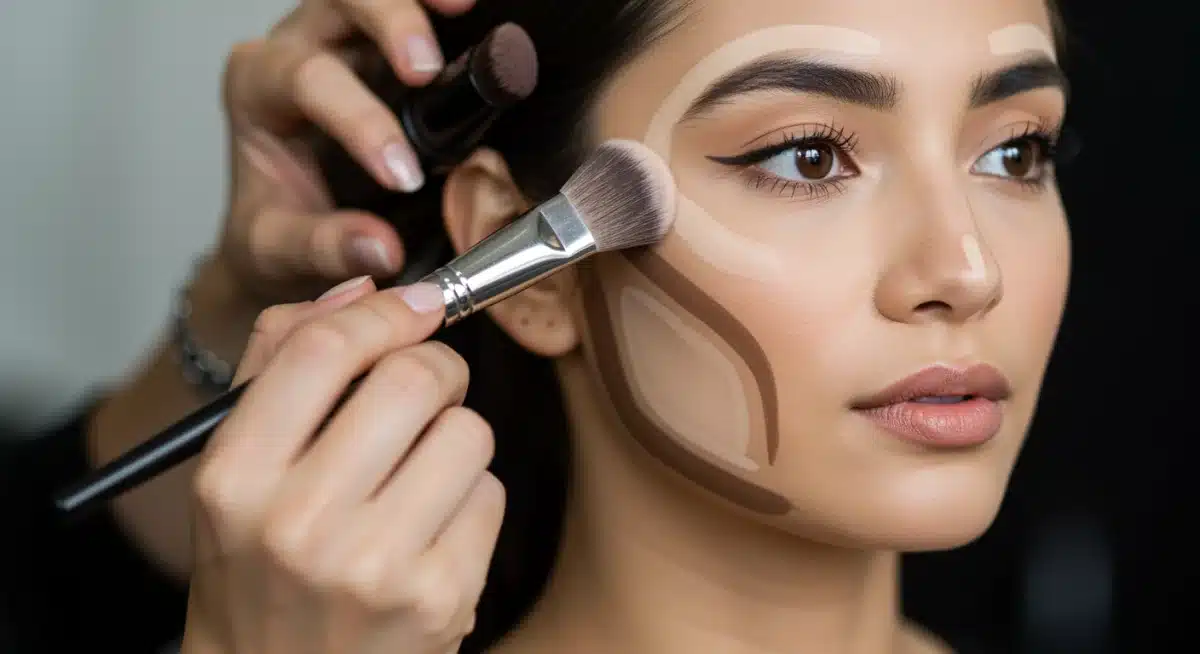
Highlighting is the counterpart to contouring, working to bring forward and illuminate areas of your face where light naturally hits. By strategically applying a lighter, often shimmery product, you can create the illusion of higher cheekbones, a more defined brow bone, and a brighter, more radiant complexion. This technique adds dimension and a healthy glow, making your skin appear fresh and vibrant.
The choice of highlighter type – liquid, cream, or powder – depends on your desired intensity and skin type. For a natural, dewy look, creams and liquids are excellent. For a more intense glow or to set cream products, powders work best. Regardless of the formula, the goal is to create a seamless, luminous effect that catches the light without appearing glittery or artificial.
Strategic placement for maximum impact
- Cheekbones: Apply highlighter to the tops of your cheekbones, extending towards your temples. This creates a lifted appearance and emphasizes your bone structure.
- Brow bone: A touch of highlighter just under the arch of your eyebrows can lift and open up your eyes.
- Inner corner of the eye: A small dot of highlighter here brightens the eyes and makes you look more awake.
- Bridge of the nose: A thin line down the bridge of the nose can make it appear straighter and more defined. Avoid the tip if you want to avoid making your nose look longer.
- Cupid’s bow: Highlighting the cupid’s bow (the dip above your upper lip) creates the illusion of fuller lips.
Just like contouring, blending is essential for highlighting. Ensure there are no harsh lines and that the product melts seamlessly into your foundation and contour. For 2025, the trend leans towards a ‘lit from within’ glow, so opt for subtle radiance rather than an overt shimmer. This approach ensures your highlight enhances your features in a sophisticated and modern way.
Mastering the blend: seamless transitions for a natural finish
The secret to a professional-looking contour and highlight is impeccable blending. Without it, your carefully placed shadows and highlights can appear as harsh, unnatural stripes on your face. The goal is to seamlessly meld the products into your skin and into each other, creating a soft transition that mimics natural light and shadow. This step is where the magic truly happens, transforming distinct lines into subtle, sculpted definition.
Blending takes practice, but with the right tools and techniques, anyone can achieve a flawless finish. Whether you’re working with creams or powders, the principle remains the same: diffuse the edges until the product is indistinguishable from your skin. Think of it as painting with light and shadow, where every stroke contributes to a harmonious overall picture.
Blending techniques and tools
- For cream products: Use a damp beauty sponge or a dense, synthetic brush. Tap and stipple the product into the skin, avoiding swiping motions that can disturb your foundation. Continue blending until all harsh lines disappear.
- For powder products: A fluffy, soft brush is ideal for diffusing powder contours and highlights. Use light, circular motions to buff the product into the skin. For more precision, a smaller blending brush can be used in targeted areas.
- Layering: If you’re using both cream and powder, apply and blend your cream products first, then lightly set them with a translucent powder before applying your powder contour and highlight. This layering technique helps to prolong wear and intensify the effect.
Always remember to blend outwards and upwards, lifting the face rather than dragging it down. Check your blending in different lighting conditions, especially natural light, to ensure there are no visible lines or patches. The 2025 beauty aesthetic prioritizes a natural, effortless look, making seamless blending more critical than ever for achieving a refined and polished appearance.
Beyond the basics: advanced tips and 2025 trends to elevate your look
Once you’ve mastered the fundamental techniques of contouring and highlighting for your face shape, it’s time to explore some advanced tips and incorporate the latest 2025 trends to truly elevate your makeup game. The beauty landscape is constantly evolving, and staying abreast of new approaches can help you refine your skills and personalize your look even further. These advanced strategies focus on enhancing specific features and adapting to modern preferences for a sophisticated finish.
One significant trend for 2025 is the emphasis on ‘skinimalism,’ where makeup enhances natural beauty rather than masking it. This means lighter applications, focusing on strategic placement, and products that offer skincare benefits. Another emerging trend is ‘reverse contouring,’ which involves applying a lighter concealer or foundation around the areas you want to sculpt, making them appear more prominent without heavy contouring.
Advanced techniques and trends
- Underpainting: Apply your contour and highlight products directly onto primed skin before your foundation. This technique creates a softer, more diffused look, as the foundation goes over the top, subtly blending everything together for an incredibly natural finish.
- Spot highlighting: Instead of broad application, use a very precise brush to apply highlighter to tiny, specific points like the center of your eyelid, the very tip of your nose, or the center of your forehead, for a targeted glow.
- Liquid contour and highlight: With the rise of ‘clean beauty’ and skin-first approaches, liquid formulas are gaining popularity for their seamless blend and dewy finish. They are perfect for achieving that ‘glass skin’ effect.
- Color-correcting contour: For those with specific concerns, using color-correcting shades within your contour can address issues like redness or sallowness while also sculpting. For example, a slightly olive-toned contour can neutralize redness.
Experiment with these advanced tips and trends to discover new ways to personalize your contour and highlight routine. Remember, makeup should be fun and expressive. Don’t be afraid to break away from conventional rules and create a look that genuinely reflects your style and personality, all while embracing the innovative spirit of 2025 beauty.
Maintenance and longevity: keeping your sculpted look flawless all day
Achieving a perfectly contoured and highlighted face is one thing, but ensuring it lasts flawlessly throughout the day is another challenge entirely. Humidity, oil production, and even accidental touches can diminish your sculpted look. Fortunately, with the right preparation and setting techniques, you can significantly extend the wear of your contour and highlight, maintaining that fresh, defined appearance from morning until night. The key lies in strategic layering and high-quality setting products.
In 2025, the focus on long-wearing, transfer-proof makeup is stronger than ever, reflecting our busy lifestyles. Investing in products designed for longevity and understanding how to properly apply them can make a substantial difference. Think of your makeup application as building a foundation that needs to be secured, much like a piece of art that needs a protective sealant.
Tips for extended wear
- Skin preparation: Start with a clean, moisturized, and primed face. A good primer creates a smooth canvas and helps your makeup adhere better, preventing it from slipping or fading. Choose a primer that addresses your skin concerns, whether it’s oil control or hydration.
- Layering products: If you use cream contour and highlight, consider setting them with a light layer of powder contour and highlight in similar shades. This ‘sandwich’ technique locks in the cream products and adds an extra layer of durability.
- Setting spray: A high-quality setting spray is your best friend for locking in your entire makeup look. Choose one that offers a long-lasting hold and a finish that complements your desired look (matte, natural, or dewy). Spritz it evenly over your face after all makeup application is complete.
- Minimal touching: Consciously try to avoid touching your face throughout the day. Transferring oils from your hands can break down your makeup and cause it to fade or smudge.
- Blotting papers: For those with oily skin, blotting papers are essential for absorbing excess oil without disturbing your makeup. Gently press them onto oily areas instead of rubbing.
By incorporating these maintenance and longevity tips into your routine, you can ensure your sculpted and radiant look stands the test of time. A durable contour and highlight not only keeps you looking polished but also boosts confidence, allowing you to focus on your day without worrying about your makeup.
| Key Point | Brief Description |
|---|---|
| Face Shape Identification | Crucial first step to tailor contour and highlight placement for optimal enhancement. |
| Product Selection | Choose cool-toned contours and luminous highlighters, matching formula to skin type. |
| Blending Mastery | Seamless blending is essential for a natural, professional finish, avoiding harsh lines. |
| 2025 Trends & Longevity | Embrace skinimalism and use setting techniques for a durable, modern sculpted look. |
Frequently asked questions about contouring and highlighting
Contour products are typically matte and cool-toned, designed to create shadows and define features. Bronzers, conversely, are usually warmer and often shimmery, intended to add warmth and a sun-kissed glow to the skin. While both add dimension, their purposes and undertones differ significantly for optimal results.
Absolutely! Contouring and highlighting can be incorporated into your daily routine. For everyday wear, opt for lighter applications and blendable cream or liquid formulas for a more natural, subtle enhancement. Reserve more dramatic techniques and heavier powder applications for special occasions when you desire a stronger, more defined look.
Select a contour shade that is two to three shades darker than your natural skin tone with a cool or neutral undertone. This mimics natural shadows effectively. Avoid warm or orange-toned contours, as these can appear muddy or unnatural on the skin, especially in natural light, making your contour look fake.
Cream contours are often recommended for beginners due to their blendability and forgiving nature. They offer a more natural, skin-like finish and are easier to correct if you apply too much. Powder contours, while offering more precision, can be harder to blend seamlessly for those new to the technique.
2025 highlighting trends emphasize a ‘lit from within’ glow and ‘skinimalism.’ This means opting for subtle, luminous finishes rather than overtly glittery ones. Liquid and cream highlighters are preferred for their natural blend, and strategic spot highlighting is popular for targeted radiance, enhancing natural features without heavy application.
Conclusion
Mastering the art of contouring and highlighting for your specific face shape is a transformative skill that remains highly relevant in the ever-evolving world of beauty. By understanding your unique facial structure, selecting the appropriate products, and employing precise application and blending techniques, you can achieve a sculpted, radiant look that enhances your natural beauty. Embracing the 2025 trends of personalized beauty and ‘skinimalism’ ensures your makeup is not only flawless but also authentically you. With practice and patience, you’ll confidently wield your brushes to define, illuminate, and celebrate your unique features, making every day a good makeup day.