
The 2026 Guide to Flawless Airbrush Foundation Application for All Skin Types: Insider Tips for a 12-Hour Wear
Welcome to the future of flawless skin! In 2026, airbrush foundation continues to reign supreme as the go-to technique for achieving an impeccably smooth, long-lasting complexion. Whether you’re a seasoned makeup artist or a beauty enthusiast looking to elevate your routine, mastering airbrush foundation application is a game-changer. This comprehensive guide will walk you through everything you need to know, from choosing the right equipment to advanced techniques for every skin type, ensuring your makeup lasts a remarkable 12 hours or more.
The allure of airbrush makeup lies in its ability to deliver a lightweight yet buildable coverage that looks incredibly natural, almost like a second skin. Unlike traditional foundation, which can often settle into fine lines or feel heavy, airbrush formulas are applied as a fine mist, creating an even layer that blurs imperfections without caking. This results in a professional, photo-ready finish that is highly sought after for special occasions, professional settings, and everyday elegance.
As we delve into the nuances of airbrush foundation application, we’ll explore the latest innovations in products and tools, offering you a 2026 perspective on what works best. From understanding your skin type to prepping your canvas, and from the initial setup of your airbrush system to advanced blending techniques, every step is crucial for achieving that coveted flawless look. Get ready to transform your makeup routine and discover the secret to truly enduring beauty.
Understanding Airbrush Foundation: What’s New in 2026?
The world of beauty is ever-evolving, and 2026 brings exciting advancements in airbrush technology and formulations. Gone are the days when airbrushing was exclusively for professionals. Today, home systems are more user-friendly, compact, and affordable, making flawless skin accessible to everyone. The core principle remains the same: a small, handheld gun connected to an air compressor sprays a fine mist of foundation onto the skin. This method allows for ultra-thin, even layers, which are key to a natural, buildable finish.
Types of Airbrush Foundation Formulas
In 2026, airbrush foundations are categorized primarily by their base:
- Silicone-Based: These are the most popular for their durability and skin-like finish. Silicone-based foundations are water-resistant, long-wearing (often exceeding 12 hours), and provide excellent coverage without feeling heavy. They are particularly favored for their ability to create a smooth, ‘blurring’ effect, minimizing the appearance of pores and fine lines. Many brands now infuse these with skincare benefits, such as hyaluronic acid or antioxidants, to further nourish the skin.
- Water-Based: Lighter in feel, water-based formulas are ideal for those seeking a very natural, sheer-to-medium coverage. They are breathable and non-comedogenic, making them a great choice for sensitive or acne-prone skin. While traditionally less long-wearing than silicone-based options, 2026 innovations have seen significant improvements in their longevity and transfer-resistance, often lasting 8-10 hours with proper setting.
- Alcohol-Based: Primarily used for special effects, body painting, or extremely long-wear applications (e.g., theatrical makeup), these are less common for everyday facial use due to their drying nature. However, they offer unparalleled staying power and water resistance.
The trend in 2026 is towards hybrid formulas that combine the best aspects of these bases, offering enhanced longevity, improved skin benefits, and a wider range of finishes, from luminous to matte. When choosing your foundation, always consider your skin type and desired finish. For achieving a truly flawless and enduring look, understanding these distinctions is the first step in successful airbrush foundation application.
Prepping Your Canvas: The Foundation for 12-Hour Wear
No matter how advanced your airbrush system or how high-quality your foundation, proper skin preparation is paramount for a flawless, 12-hour wear. Think of your skin as a canvas; the smoother and more hydrated it is, the better the foundation will adhere and appear. This step is often overlooked but is absolutely critical for optimizing your airbrush foundation application.
Step 1: Cleanse and Tone
Begin with a clean face. Use a gentle cleanser suited for your skin type to remove any impurities, excess oil, or residual makeup. Follow with a hydrating toner to balance your skin’s pH and prepare it for subsequent products. Avoid harsh cleansers or toners that can strip your skin, as this can lead to uneven application and reduced wear time.
Step 2: Hydrate and Moisturize
Hydration is key. Apply a lightweight, non-greasy moisturizer that absorbs well into your skin. For dry skin, a richer cream might be necessary, while oily skin types should opt for oil-free or gel-based formulas. Allow the moisturizer to fully absorb for at least 5-10 minutes before moving on. Well-hydrated skin provides a plump, smooth surface, preventing the foundation from clinging to dry patches.
Step 3: Prime for Perfection
A good primer acts as a barrier between your skin and the foundation, creating an even texture and extending wear. Choose a primer that addresses your specific skin concerns:
- Hydrating Primers: For dry or normal skin, to add an extra layer of moisture and create a dewy finish.
- Mattifying Primers: For oily or combination skin, to control shine and minimize pores.
- Color-Correcting Primers: To neutralize redness, sallowness, or dullness before foundation application.
- Pore-Minimizing Primers: To smooth out texture and create a truly seamless surface.
Apply a thin layer of primer evenly across your face, focusing on areas where makeup tends to fade or pores are more visible. Let it set for a few minutes before you begin your airbrush foundation application. This crucial step not only enhances the adherence of the foundation but also contributes significantly to its impressive 12-hour staying power.
Choosing the Right Airbrush System and Foundation for Your Skin Type
The market for airbrush systems has expanded dramatically by 2026, offering options for every budget and skill level. Selecting the right equipment and foundation tailored to your skin type is crucial for achieving optimal results and ensuring a comfortable, long-lasting wear.
Airbrush Compressors and Guns
- Compressor: Look for a quiet compressor with adjustable air pressure settings. Beginners might prefer a simpler, fixed-pressure system, while experienced users will benefit from variable control to achieve different effects. Portable, cordless options are also gaining popularity for their convenience.
- Airbrush Gun (Stylus): The most common type for makeup is a single-action, gravity-feed gun. This means the trigger controls only the air, and the foundation is loaded into a cup on top. Double-action guns offer more control over both air and product flow but have a steeper learning curve. For flawless airbrush foundation application, a fine-needle nozzle (around 0.2-0.3mm) is ideal for an ultra-fine mist.
Foundation Selection by Skin Type
Matching your foundation to your skin type is paramount for a natural look and extended wear:
- Oily/Combination Skin: Opt for oil-free, mattifying silicone-based or advanced water-based formulas. These will help control shine and provide a durable finish. Look for non-comedogenic options to prevent breakouts. The fine mist of airbrushing is excellent for oily skin as it doesn’t add extra product that can make oiliness worse.
- Dry/Normal Skin: Hydrating silicone-based or water-based foundations infused with moisturizing ingredients like hyaluronic acid are perfect. These will prevent the foundation from looking patchy or clinging to dry areas. A luminous or satin finish will enhance a healthy glow.
- Sensitive Skin: Water-based or hypoallergenic silicone-based formulas are generally best. Always check for fragrance-free and non-irritating ingredients. The gentle application of airbrushing minimizes contact and friction, which can be beneficial for sensitive skin.
- Mature Skin: Silicone-based foundations with a slightly luminous finish are excellent as they tend to blur fine lines and wrinkles without settling. Avoid heavy, matte formulas. The lightweight nature of airbrush foundation prevents it from caking, which is a common concern for mature skin.
Always patch test new foundations to ensure they match your skin tone and don’t cause irritation. Many brands offer sample sizes, which is a great way to find your perfect shade and formula for effective airbrush foundation application.
The Art of Airbrush Foundation Application: Step-by-Step for a Flawless Finish
Now that your skin is prepped and your equipment is ready, it’s time for the main event: the airbrush foundation application itself. This process requires a steady hand and a bit of practice, but the results are well worth the effort. Remember, light layers are key to achieving a natural, flawless, and long-lasting finish.
Step 1: Setting Up Your System
Ensure your airbrush gun is clean and free of any previous makeup residue. Add 5-10 drops of your chosen airbrush foundation into the cup of the gun. Start with less; you can always add more. Turn on your compressor and set the air pressure to a low-to-medium setting (typically between 5-10 PSI for beginners, adjustable higher for more experienced users or specific products).
Step 2: The Practice Pass
Before applying to your face, do a test spray on a tissue or your hand. This helps you get a feel for the air pressure and product flow. You should see a fine, even mist. If it’s splattering, the pressure might be too low, or the foundation might be too thick. If it’s too sheer, you might be holding it too far away or the product flow is too restricted.
Step 3: Application Technique – The ‘Four Finger’ Rule
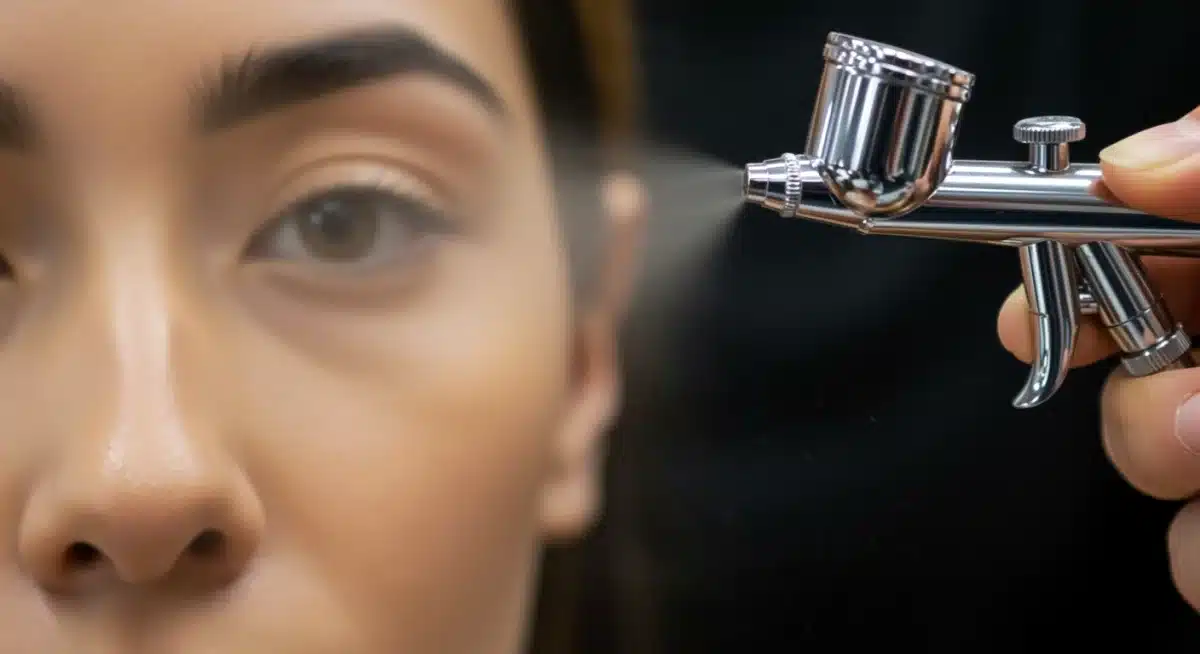
Hold the airbrush gun approximately four fingers (about 4-6 inches) away from your face. Keep the gun moving in small, circular motions. Never hold it still in one spot, as this will lead to concentrated product and an uneven finish. The goal is to build coverage gradually with sheer layers.
Start with areas that need the most coverage, typically the center of your face (nose, forehead, chin). Then, lightly mist outwards towards your jawline and hairline. Ensure even coverage around the eyes, being careful not to spray directly into them. For a natural look, use even lighter passes around the edges of your face to avoid a harsh line.
Step 4: Building Coverage
Apply one thin layer, then assess the coverage. If you need more, wait a few seconds for the previous layer to dry slightly, then apply another thin layer. Repeat this process until you achieve your desired level of coverage. Remember, airbrush foundation is designed to be buildable, not heavy. Over-applying will negate the natural, lightweight effect and can compromise longevity.
Step 5: Spot Concealing (Optional)
For stubborn blemishes or dark spots that require extra coverage, you can either apply an additional tiny dot of airbrush foundation directly onto the area and then lightly mist over it, or use a traditional cream concealer applied with a small brush and blended out. Be sparing with concealer to maintain the seamless finish of the airbrush.
Step 6: Blending and Finishing Touches
Once you’ve achieved your desired coverage, take a final pass over your entire face from a slightly further distance to ensure everything is seamlessly blended. You can also use a clean, damp beauty sponge or brush to lightly pat any areas that feel too heavy or need further blending, though with proper airbrush technique, this should be minimal. This meticulous approach to airbrush foundation application ensures a truly flawless and professional result.
Advanced Techniques for Different Skin Types and Concerns
While the basic principles of airbrush foundation application remain consistent, tailoring your technique to specific skin types and concerns can elevate your results from great to truly exceptional. Here are some advanced tips for achieving a flawless 12-hour wear on diverse complexions.
For Oily Skin: Mastering Matte and Longevity
- Primer Power: Double down on mattifying primers, especially in the T-zone. Consider a primer specifically designed to absorb oil.
- Foundation Choice: Stick to oil-free, silicone-based formulas known for their mattifying and long-wearing properties.
- Light Layers: Apply even thinner layers than usual. The less product sitting on the skin, the less likely it is to break down with oil production.
- Setting Spray: After your foundation, use an oil-control or mattifying setting spray. This will lock everything in place and extend the 12-hour wear, preventing shine from breaking through.
- Powder (Optional): If absolutely necessary, lightly dust a translucent setting powder only on the oiliest areas after airbrushing. Use a fluffy brush for a sheer application.
For Dry/Normal Skin: Enhancing Hydration and Glow
- Hydration First: Ensure your skin is thoroughly moisturized and consider a hydrating primer. You might even mist your face with a hydrating spray before foundation application.
- Foundation Choice: Opt for hydrating silicone-based or water-based formulas with a luminous or satin finish. Avoid overly matte foundations.
- Dewy Finish: To enhance a dewy look, you can mix a tiny drop of liquid highlighter into your airbrush foundation before applying, or lightly mist a liquid highlighter over specific areas (cheekbones, bridge of nose) after foundation.
- Setting Spray: Use a hydrating or dewy-finish setting spray to lock in moisture and add to the radiant look, ensuring comfortable wear throughout the day.
For Mature Skin: Softening Lines and Achieving a Youthful Look
- Hydration and Plumping: Focus on intense hydration and use a plumping primer to minimize the appearance of fine lines and wrinkles.
- Foundation Choice: Silicone-based foundations are excellent as they tend to blur imperfections without settling into lines. Choose formulas with light-reflecting properties for a youthful glow. Avoid heavy, thick foundations.
- Less is More: Apply very sheer layers. Over-application can emphasize texture and lines. The goal is to even out skin tone rather than mask it.
- Eye Area: Use an extra light hand around the eyes. If you have fine lines, consider mixing a tiny drop of facial oil into your foundation specifically for this area to create more slip.
- Setting: A hydrating setting spray is preferable to powder, which can look dry and emphasize texture on mature skin.

For Acne-Prone Skin: Gentle Coverage and Non-Irritating Formulas
- Gentle Prep: Use non-comedogenic and hypoallergenic cleansers, toners, and moisturizers.
- Foundation Choice: Water-based or non-comedogenic silicone-based foundations are ideal. Look for formulas specifically designed for sensitive or acne-prone skin.
- Spot Treatment (Pre-Foundation): If using a topical acne treatment, apply it before your primer and allow it to fully absorb.
- Targeted Coverage: Use very light, gentle passes over active breakouts. Avoid heavy application, which can draw attention to the area. Airbrushing is great for acne-prone skin because it avoids physical contact and spreading bacteria from brushes or sponges.
- Hygiene: Always ensure your airbrush gun is meticulously cleaned after each use to prevent bacterial buildup.
By adapting your airbrush foundation application techniques, you can ensure that regardless of your skin type or concerns, you achieve a stunning, long-lasting finish that feels comfortable and looks natural for a full 12 hours.
Ensuring 12-Hour Wear: Setting, Touch-Ups, and Maintenance
Achieving a flawless airbrush foundation application is one thing, but making it last for 12 hours is another. With the right setting techniques and minimal maintenance, your airbrushed complexion can withstand the demands of a long day or night. Here’s how to lock in your look.
The Power of Setting Spray
A high-quality setting spray is your best friend for extending the wear of airbrush foundation. Unlike traditional powders that can sometimes dull the natural finish, setting sprays create a protective barrier that locks makeup in place without adding weight or texture.
- Application: Hold the setting spray about 8-10 inches away from your face and mist generously in an ‘X’ and ‘T’ motion. Allow it to air dry completely.
- Types: Choose a setting spray that complements your skin type and desired finish. Mattifying sprays are excellent for oily skin, hydrating sprays for dry skin, and long-lasting or waterproof formulas for maximum staying power.
- Layering: For ultimate longevity, some professionals advocate for a light mist of setting spray before the airbrush foundation, and then another application after the foundation is complete. This sandwiching technique can significantly boost wear time.
Strategic Powdering (If Necessary)
While airbrush foundation often negates the need for extensive powdering, those with very oily skin or in humid climates might benefit from a light dusting of translucent setting powder. Apply only to areas prone to shine (T-zone) using a large, fluffy brush and a very light hand. The goal is to set, not to add coverage or cakiness. Use pressing motions rather than sweeping to avoid disturbing the foundation.
Minimal Touch-Ups Throughout the Day
One of the benefits of flawless airbrush foundation application is the reduced need for touch-ups. However, if you find your skin getting a bit shiny after several hours, resist the urge to add more foundation or powder directly.
- Blotting Papers: Gently press blotting papers onto oily areas to absorb excess sebum without disturbing your makeup.
- Powder Puffs (Very Lightly): If you must use powder, use a clean powder puff to lightly press a tiny amount of translucent powder onto oily spots.
- Mini Setting Spray: A travel-sized setting spray can be a lifesaver. A quick mist can refresh your makeup and extend its wear.
Maintenance for Your Airbrush System
Proper cleaning and maintenance of your airbrush system are crucial not only for its longevity but also for consistent, flawless application. A clogged or dirty gun can lead to splattering, uneven coverage, and bacterial buildup.
- Immediate Cleaning: Always clean your airbrush gun immediately after each use. Run airbrush cleaning solution or distilled water through the gun until it sprays clear.
- Deep Cleaning: Periodically disassemble the gun for a more thorough cleaning, ensuring all parts are free of dried foundation.
By following these setting and maintenance tips, your meticulously applied airbrush foundation application will not only look stunning but will also hold up beautifully, ensuring a flawless complexion for a full 12 hours or even longer.
Troubleshooting Common Airbrush Foundation Issues
Even with the best preparation and technique, you might encounter a few hiccups during your airbrush foundation application journey. Don’t despair! Most common issues are easily resolved with a bit of troubleshooting. Here’s how to tackle them and ensure your path to flawless skin is smooth.
Issue 1: Foundation is Splattering or Spraying Unevenly
- Possible Cause: Foundation is too thick, air pressure is too low, or the nozzle is clogged.
- Solution:
- Thinning Foundation: If using a thicker formula, add a drop or two of airbrush thinner (specific to your foundation type) or distilled water to the foundation cup.
- Increase Air Pressure: Gradually increase the PSI on your compressor.
- Clean Nozzle: Thoroughly clean your airbrush gun. A tiny piece of dried makeup can cause major disruptions. Disassemble and use a fine brush or needle to clear the nozzle.
Issue 2: Foundation Looks Cakey or Heavy
- Possible Cause: Applying too much product, holding the gun too close, or foundation is too thick for your skin type.
- Solution:
- Distance is Key: Ensure you’re holding the gun 4-6 inches away from your face.
- Lighter Layers: Apply in very sheer, gradual layers. It’s easier to add than to remove.
- Keep Moving: Never stop the gun in one spot. Continuous, circular motions prevent buildup.
- Product Choice: Re-evaluate your foundation formula. If it’s consistently heavy, you might need a lighter consistency or a different base (e.g., switch from a very thick silicone to a lighter water-based).
Issue 3: Foundation is Not Lasting (Less Than 12 Hours)
- Possible Cause: Improper skin prep, no primer/setting spray, or incorrect foundation formula for your skin type.
- Solution:
- Optimize Prep: Ensure thorough cleansing, moisturizing, and especially priming. A good primer creates a better canvas for adherence.
- Use Setting Spray: A high-quality setting spray is crucial for extending wear. Consider layering it before and after foundation.
- Foundation Match: Verify your foundation formula is suitable for your skin type (e.g., mattifying for oily skin, hydrating for dry skin).
- Avoid Touching Face: Minimize touching your face throughout the day, as oils and friction can break down makeup.
Issue 4: Foundation is Clinging to Dry Patches or Fine Lines
- Possible Cause: Insufficient skin hydration, dry patches on the skin, or foundation formula is too matte/drying.
- Solution:
- Exfoliate Regularly: Gently exfoliate your skin to remove dead skin cells that can cause patchiness.
- Intense Hydration: Amp up your moisturizing routine. Use a hydrating serum and a richer moisturizer. A hydrating primer is also beneficial.
- Foundation Choice: Switch to a more hydrating airbrush foundation, perhaps one with a luminous or satin finish, and avoid overly matte formulas.
- Apply Less: Use very thin layers over textured areas.
Issue 5: Color Appears Flat or Mask-like
- Possible Cause: Incorrect shade match, too much coverage, or lack of dimension in the makeup.
- Solution:
- Re-evaluate Shade: Ensure your foundation shade truly matches your neck and décolletage, not just your face.
- Sheer Application: Build coverage gradually. The beauty of airbrush is its ability to look like skin, not a mask.
- Add Dimension: After foundation, use airbrush blush, bronzer, and highlighter to bring back natural contours and a healthy glow. This is an advanced step of airbrush foundation application that truly completes the look.
Patience and practice are your greatest allies when learning airbrush foundation application. With these troubleshooting tips, you’ll be able to quickly identify and correct issues, leading to consistently flawless and long-lasting results.
The Future of Flawless: Airbrush Foundation Trends for 2026 and Beyond
As we navigate further into 2026, the landscape of beauty, and specifically airbrush foundation application, continues to evolve with exciting new trends and innovations. The focus remains on achieving a natural, ‘skin-like’ finish, but with an increased emphasis on sustainability, personalization, and advanced skincare integration.
Sustainable and Eco-Conscious Formulations
The beauty industry is increasingly moving towards eco-friendliness, and airbrush foundations are no exception. Expect to see more:
- Refillable Cartridges: Brands are introducing systems with refillable foundation cartridges, significantly reducing plastic waste.
- Clean Ingredients: A stronger push for ‘clean’ beauty, with formulas free from parabens, phthalates, and other potentially harmful chemicals, while still maintaining performance and longevity.
- Vegan and Cruelty-Free: The standard expectation for new products, reflecting consumer demand for ethical beauty.
Hyper-Personalization and AI Integration
The future of airbrush foundation application is deeply personal:
- AI Shade Matching: Advanced AI tools that scan your skin and recommend the perfect foundation shade and undertone, even offering custom-blended formulas.
- Skincare-Infused Formulas: Foundations that are not just makeup, but powerful skincare treatments. Think airbrush foundations packed with peptides, growth factors, and advanced hydrators that actively improve skin health over time.
- Modular Systems: Airbrush systems that allow users to easily swap out different foundation types, serums, and even liquid blushes or highlighters, all within the same device, offering unparalleled versatility.
Enhanced Longevity and Climate Resilience
The demand for makeup that can withstand any condition continues to grow, pushing innovations in long-wear technology:
- 12-Hour+ Promises: While 12-hour wear is already achievable, 2026 sees foundations pushing for 18-24 hour wear, designed to be truly ‘life-proof’ against humidity, sweat, and transfer.
- Adaptive Formulas: Foundations that adapt to environmental changes, maintaining their finish and integrity whether you’re in a dry office or a humid outdoor event.
Beyond Foundation: Full-Face Airbrushing
The trend is moving towards using airbrush technology for more than just foundation. Expect to see widespread adoption of airbrush systems for:
- Blush and Bronzer: Seamlessly applied for a natural flush and contour.
- Highlighter: A fine mist for a truly diffused, luminous glow.
- Concealer: Targeted application for spot correction with an undetectable finish.
These advancements promise to make airbrush foundation application an even more indispensable tool in every beauty routine, offering not just a flawless finish but also a smarter, more sustainable, and highly personalized experience. Embracing these trends means staying at the forefront of beauty innovation and enjoying the benefits of truly advanced makeup technology.
Conclusion: Your Path to 12-Hour Flawless Airbrush Perfection
The journey to mastering airbrush foundation application is an exciting one, culminating in a complexion that is not only flawless but also incredibly long-lasting. As we’ve explored in this 2026 guide, achieving that coveted 12-hour wear and natural finish is a combination of understanding your skin, selecting the right tools and formulas, and honing your technique with practice.
From the meticulous preparation of your skin to the delicate art of misting on thin layers, every step plays a vital role. We’ve delved into the nuances of choosing the perfect airbrush system and foundation for your unique skin type – whether it’s oily, dry, sensitive, or mature – ensuring that everyone can benefit from this transformative makeup method. Advanced techniques and troubleshooting tips empower you to overcome common hurdles, leading to consistently stunning results.
Moreover, the beauty landscape of 2026 brings forward innovations that make airbrushing more accessible, sustainable, and personalized than ever before. With skincare-infused formulas, AI-driven shade matching, and a growing emphasis on ethical production, airbrush foundation is not just a trend; it’s a staple in modern beauty routines.
Embrace the power of airbrush technology. With patience, practice, and the insights from this guide, you are now equipped to achieve a professional, photo-ready finish that withstands the test of time. Say goodbye to heavy, caked-on makeup and hello to a radiant, natural, and truly flawless complexion that lasts from dawn until dusk. Your perfect airbrush foundation application awaits!