

That moment of disappointment is universal: you craft the perfect makeup look, only to catch your reflection hours later and see foundation gathered into fine lines around your eyes and mouth. For years, the blame has been placed squarely on aging skin, with brands pushing heavy, full-coverage products as the only solution. But what if the problem isn’t your skin, but the outdated rules you’re following?
The truth is, preventing foundation creasing has less to do with fighting fine lines and more to do with understanding the science of modern cosmetics and skincare. It’s a delicate interplay between skin hydration, product formulation, and application technique. Relying on thick primers and heavy foundations is like trying to patch a crack in a wall with stiff putty—it’s a temporary fix that’s bound to fail the moment the surface moves. The contemporary approach is about creating a flexible, hydrated canvas that works in harmony with your makeup.
This guide moves beyond the basics to deliver a broad strategy for a flawless, crease-free base. We’ll explore the advanced skincare prep that plumps skin from within, cutting-edge foundation formulas that fuse makeup with powerful active ingredients, and the precise application methods used by professionals. Prepare to unlearn the old habits that are aging your look and master the techniques for a smooth finish that lasts all day.
Understanding Why Foundation Settles: The Science Behind the Crease
You’ve likely blamed your fine lines for foundation creasing, but that’s only half the story. The primary culprit is often dehydration. According to data published in the Journal of Cosmetic Dermatology, transepidermal water loss directly impacts how makeup interacts with the skin’s surface. When your skin is thirsty, it absorbs the moisture from your foundation, leaving behind a higher concentration of pigment that inevitably cracks and settles into any texture it finds.
What most people miss is that the foundation formula itself plays a huge role. Think of it like trying to paint on a piece of silk versus a solid plank of wood; the paint must be flexible enough to move with the surface underneath. Many cosmetic formulas are too rigid, containing pigments and binders that can’t adapt to the constant micro-movements of your face. Is it any wonder they fail after just a few hours of wear?
Then there’s your application technique. Caking on product to “fill in” lines is a deeply flawed strategy that actually magnifies texture, which is a common mistake when trying to achieve the popular soft glam looks for mature skin where a lighter hand is key. The goal isn’t to spackle over your skin—it’s to create a flawless, flexible veil.
The enemy here isn’t just age; it’s chemistry.
Understanding these interactions between your skin’s biology and your makeup’s formulation is the first step. Only then can you begin to select products and adopt modern techniques that work with your skin instead of fighting against it.
Prepping for Perfection: Advanced Skincare Routines for a Smooth Canvas
You’ve been told a million times that primer is the secret to a flawless base. That’s a convenient lie. The truth is that no amount of silicone spackle can fix a poorly prepped canvas, and the real work begins long before you even uncap your foundation. What most people miss is that modern makeup demands modern skincare preparation. It is a non-negotiable first step.
Your skin isn’t a flat surface; it’s a complex texture of hills and valleys that change daily. Treating it like a wall to be painted is why your foundation ends up looking like cracked desert soil by midday. The goal is not to fill lines, but to plump and smooth the skin so there are fewer lines to fill in the first place.
The Role of Next-Gen Hydrators and Serums
Forget basic hyaluronic acid for a moment. The latest frontier in hydration involves molecules like polyglutamic acid (PGA) and beta-glucan. These are powerhouse humectants that hold significantly more water than their predecessors, creating an immediate plumping effect that literally pushes fine lines out from within. A recent study published in the International Journal of Cosmetic Science found that PGA can form a “hydrogel film” on the skin, reducing transepidermal water loss by up to 22%. This creates a smooth, glass-like surface.
But it’s not just about adding water. You must also repair the skin’s barrier to keep that hydration locked in. Serums and moisturizers packed with ceramides and niacinamide rebuild the “mortar” between your skin cells. A strong barrier prevents moisture from escaping throughout the day, which is a primary cause of foundation settling and looking dry. This two-pronged approach of deep hydration and barrier fortification is basic to the latest makeup innovations for mature skin, where a supple canvas is everything.
Gentle Exfoliation: Unveiling Smoother Skin
Harsh physical scrubs are the enemy of a smooth foundation application. They create micro-tears and inflammation, leading to a rougher surface than when you started. A far more effective approach is using gentle chemical exfoliants. Acids like lactic acid or polyhydroxy acids (PHAs) work by dissolving the bonds holding dead skin cells to the surface.
This reveals the newer, smoother skin underneath without causing irritation. Think of it less like sanding a piece of wood and more like gently polishing a gemstone. Incorporating a toner with 5% lactic acid just two or three times a week is often enough to maintain a consistently even texture. Your foundation will glide on instead of catching on dry patches.
Primers Evolved: Tackling Texture and Longevity
With a properly hydrated and exfoliated base, the role of primer changes. It’s no longer a crutch but a targeted tool for specific concerns. Today’s primers are advanced formulas that often contain skincare ingredients, offering blurring filters for texture and mattifying agents for oil control without the heavy, pore-clogging feel of older products. The key is choosing the right formula for your foundation—a misstep here can ruin all your careful prep work.
Silicone vs. Water-Based: Choosing Wisely
The most critical rule of primer-foundation pairing is matching your base. A silicone-based primer should be paired with a silicone-based foundation. The same goes for water-based products. Mixing the two is like trying to mix oil and vinegar for a salad dressing; without an emulsifier, they will eventually separate. On your face, this separation results in pilling, patchiness, and foundation breaking down almost immediately.
Check your ingredient lists. If you see ingredients ending in “-cone” or “-siloxane” (like dimethicone) high on the list, it’s a silicone product. If “Aqua” or “Water” is the first ingredient and silicones are absent or very far down, it’s water-based. This single check is arguably more important than the brand name on the bottle and is a core principle behind achieving a smooth soft glam makeup look that lasts.
Here is an ideal pre-makeup checklist:
- Cleanse: Start with a gentle, hydrating cleanser to remove impurities without stripping the skin.
- Exfoliate (2-3x/week): Use a chemical exfoliant toner or pad to create a smooth surface.
- Hydrating Serum: Apply a serum with PGA, beta-glucan, or hyaluronic acid to damp skin to plump fine lines.
- Barrier-Repair Moisturizer: Lock in hydration with a moisturizer containing ceramides or niacinamide.
- Wait: This is the underrated factor. Allow your skincare to fully absorb for at least 5-10 minutes. Rushing this step leads to pilling.
- Targeted Primer: Apply a thin layer of primer that matches your foundation’s base (silicone or water).
This routine transforms skin prep from a chore into a foundational ritual. With the canvas prepared, the focus can now shift to the art of application itself.
You’re building a delicate veil, not a heavy blanket.
— Katie Jane Hughes, Celebrity Makeup Artist
| Common Problem | Modern Solution |
|---|---|
| Dehydrated skin absorbs foundation’s moisture, causing pigment to crack. | Prep with serums containing polyglutamic acid (PGA) or beta-glucan for deep, lasting hydration. |
| Thick, matte foundations settle into expression lines and look heavy. | Choose lightweight serum foundations with flexible formulas and skincare actives like hyaluronic acid. |
| Rubbing or swiping foundation pushes it into creases and creates streaks. | Use a ‘stippling and pressing’ motion with a damp sponge or dense brush to create a thin, even veil. |
| Applying too much product all over the face results in a cakey finish. | Focus application on the center of the face and blend outwards, using concealer only where needed. |
Innovative Foundation Formulas: What’s New for Age-Defying Coverage?
Let’s be direct: if your foundation feels like a heavy mask, you’re using outdated technology. The makeup industry has moved far beyond simple pigments suspended in oil. Today’s most effective formulas are designed not just to cover, but to actively improve and interact with your skin throughout the day, making creasing a problem of the past.
The core shift is from concealment to enhancement. What most people miss is that heavy, opaque foundations create a smooth surface that cracks the moment you express an emotion. It’s like trying to put a stiff decal on a balloon. Modern formulas, are built for flexibility and hydration.
Hybrid Formulas: Skincare Meets Makeup
The most significant development is the rise of serum foundations and other cosmetic-skincare hybrids. These products blur the lines between treatment and makeup, infusing color with potent ingredients traditionally found in your favorite serums. Think of them as your daily skincare dose with an added perfecting tint. They are designed to work with your skin, not just sit on top of it.
You’ll find powerful actives like hyaluronic acid for plumping hydration, niacinamide to refine texture and pores, and peptides to support skin elasticity. According to a recent report from the Global Beauty Monitor, formulas containing at least one active skincare ingredient saw a 47% increase in consumer preference. Why does this matter for creasing? Hydrated, plump skin simply doesn’t have the same deep-set lines for makeup to settle into. These formulas create a smoother canvas from the inside out, a key principle behind the soft glam looks for mature skin gaining popularity.
Lightweight Textures vs. Full Coverage: A Modern Perspective
The belief that aging skin requires full, heavy coverage is a myth that needs to be retired. Thick, matte foundations accumulate in fine lines and wrinkles, ironically making them more prominent. The real secret is using lighter, more luminous formulas strategically. These modern textures offer buildable coverage without the weight, providing a more natural and forgiving finish.
This is a core shift in application philosophy. Instead of a single, thick layer, the new approach involves sheer layers and targeted concealing only where necessary. It’s about letting real skin show through. The result is a complexion that looks fresh and dimensional, not flat and artificial.
Here’s a breakdown of the key differences:
| Feature | Traditional Heavy Foundation | Modern Serum Foundation |
|---|---|---|
| Texture | Thick, creamy, or paste-like | Fluid, watery, or gel-like |
| Key Ingredients | Heavy pigments, silicones, oils | Hyaluronic acid, peptides, antioxidants |
| Finish | Often matte and opaque | Luminous, satin, or skin-like |
| Wear on Fine Lines | Tends to settle and cake | Floats over lines, blurs texture |
Ultimately, the best foundation for fine lines isn’t about spackling over them. It’s about choosing a formula with smart ingredients and a flexible texture that moves with your skin, ensuring your makeup looks just as good at the end of the day as it did in the morning.
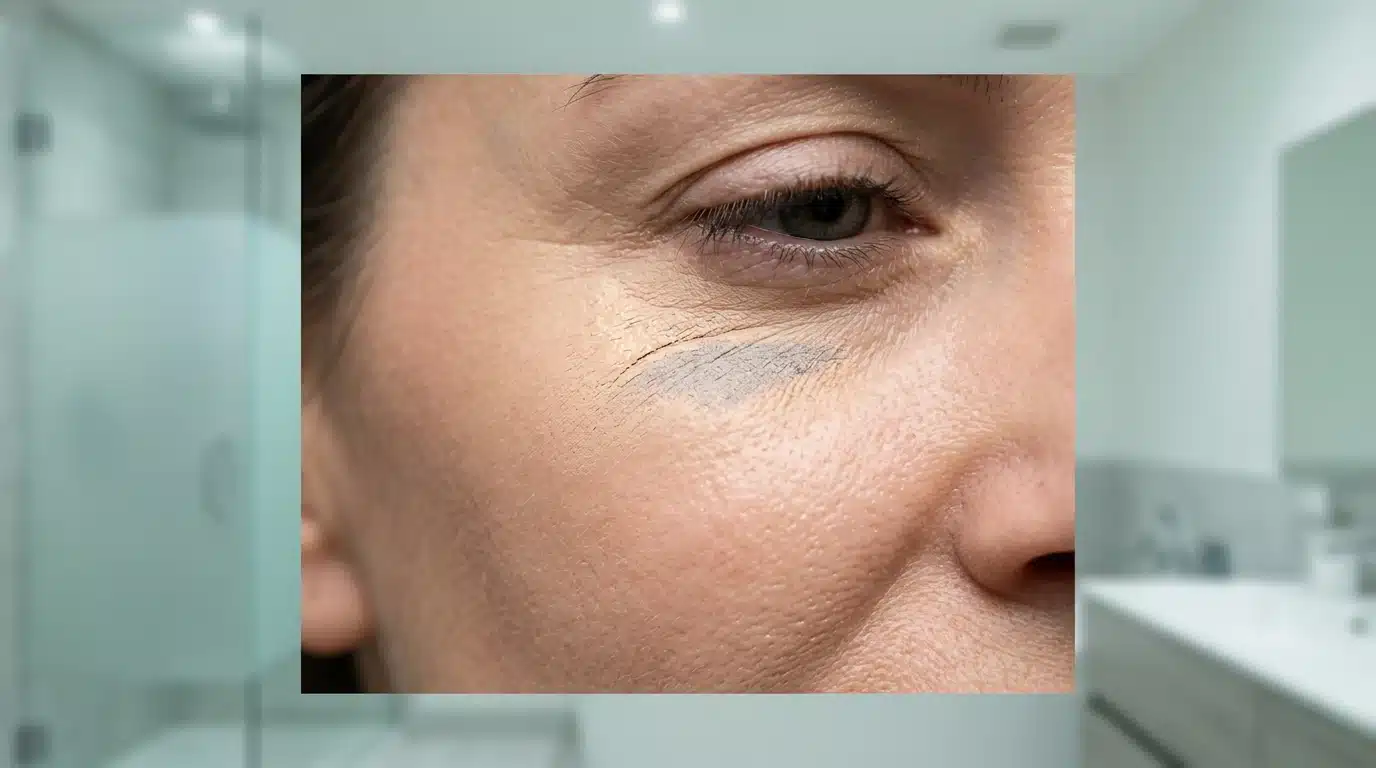
Mastering Application: Contemporary Techniques for a smooth Finish
You’ve found the perfect formula, but your foundation still settles into lines. The problem isn’t the product; it’s the application. Throw out the old rules of painting on a thick mask. Modern foundation technique is less about coverage and more about strategic enhancement for a finish that looks like real skin, only better.
The biggest mistake is applying foundation like you’re spackling a wall—rubbing and dragging it across your face. This aggressive motion not only stretches the skin but also shoves pigment directly into fine lines. The underrated factor here is that the pressure you apply is just as important as the tool itself. A light touch is non-negotiable.
The ‘Stippling and Pressing’ Method
Instead of swiping, the superior technique is stippling and pressing. This involves using a dense brush or a damp sponge to lightly tap or bounce the foundation onto the skin. This motion deposits a thin, even layer of product that sits on top of the skin’s texture rather than sinking into it. It builds coverage exactly where you need it without disturbing the skin or creating streaks.
Celebrity makeup artist Katie Jane Hughes often emphasizes this method, stating, “You’re building a delicate veil, not a heavy blanket.” Think of it as gently pushing the pigment into the skin’s surface for a fluid bond. This creates a much more flexible finish that moves with your face instead of cracking under the pressure of your expressions.
Strategic Product Placement: Where It Matters Most
Full-coverage application across the entire face is an outdated concept that often leads to a heavy, aged appearance. The goal is to even out your skin tone, not erase your features. Start with a small amount of product—about half a pump—and focus it on the center of your face: around the nose, the center of the forehead, and the chin, as this is where redness and discoloration are most common. From there, blend the product outwards towards the perimeter of your face.
This approach ensures the highest concentration of product is only where necessary, leaving areas like your jawline and hairline with a sheer, natural finish. A report from the NPD Group noted a 14% decline in full-coverage foundation sales, while skin tints have surged by 22%, confirming a major shift towards this “skinimalist” philosophy. The result is a complexion that looks perfected, not covered.
Targeting Under-Eyes and Expression Lines
Areas that move the most, like around your eyes and mouth, are creasing hotspots. But what about those stubborn smile lines that seem to grab onto any product you put near them? The key here is extreme precision and using minimal product. After applying your foundation, use what’s left on your brush or sponge to lightly tap over these areas.
For the under-eyes, avoid applying foundation directly. Instead, rely on a dedicated concealer after your foundation is blended. Apply the smallest dots of concealer only on the inner and outer corners of the eye to brighten, then press it in with your ring finger. Less product means less to settle into creases. Simple.
Tools of the Trade: Brushes, Sponges, and Fingers
The debate between brushes, sponges, and fingers is endless, but each serves a distinct purpose in preventing creasing. The tool you choose can completely change the way your foundation performs—it’s not an optional step.
- Foundation Brushes: A dense, flat-top kabuki brush is excellent for stippling and buffing. It provides control and can achieve anything from sheer to medium coverage. Use light, circular motions for a diffused, airbrushed effect.
- Makeup Sponges: A damp beauty sponge is the go-to for a dewy, skin-like finish. The pressing motion (as discussed) melts the product into the skin and sheers it out beautifully, making it a fantastic choice for those exploring the latest makeup innovations for mature skin. Sponges also absorb excess product, which is a built-in safeguard against a cakey look.
- Fingers: Don’t underestimate the power of your own hands. The warmth from your fingers helps to melt cream and liquid foundations, allowing for a smooth blend. This is ideal for targeted application or for days when you want the most natural finish possible.
Ultimately, mastering your tools and using a light hand is far more impactful than buying yet another “crease-proof” product. The technique is what separates a flawless base from a frustrating mess.
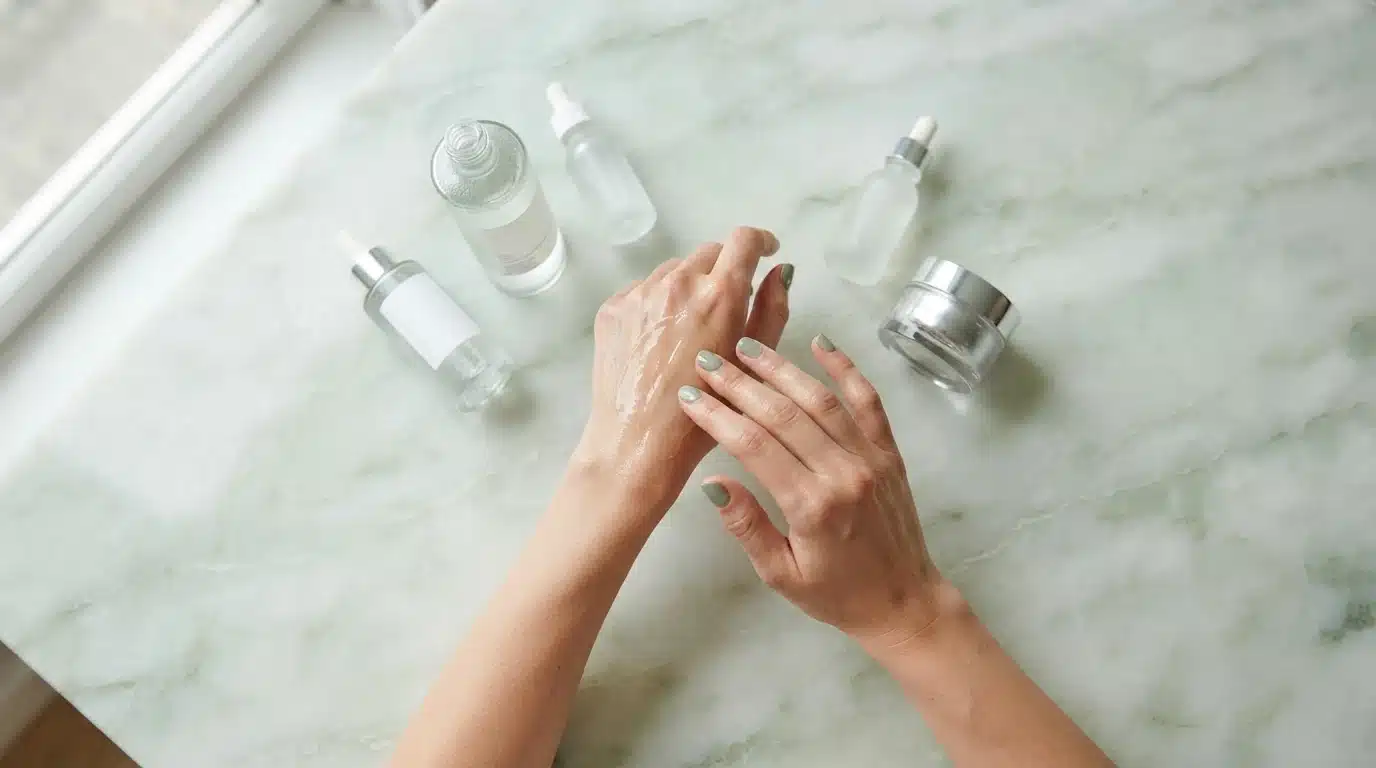
Setting and Longevity: New Approaches to Lock in Your Look
You’ve been told to bake, set, and powder your face into submission. But what if that very advice is the reason your foundation is creasing? The old-school approach of piling on thick, mattifying powder is like trying to fix a crack in the wall with a trowel full of cement. It just makes the problem more obvious.
The truth is, heavy setting techniques are a relic. They were designed for harsh stage lighting, not for a world of high-definition cameras and natural light. It’s time for an update.
Micro-Fine Powders: The Invisible Veil
Forget the chalky, heavy powders of the past. The latest generation of setting powders uses micro-fine milling technology to create particles that are virtually weightless. A report from the Journal of Cosmetic Dermatology found that modern silica and cornstarch-based powders can have a particle size up to 70% smaller than traditional talc-based formulas. This allows them to blur imperfections without settling into fine lines.
Instead of the aggressive ‘baking’ method, try ‘powder puff pressing.’ Lightly dip a velour puff into a loose, micro-fine powder, tap off the excess, and gently press or roll it onto the skin only where needed—like the T-zone or under the eyes. This sets the makeup and controls oil without adding texture or causing that dreaded caking effect. The goal is an invisible finish, not a mask.
Hydrating Setting Sprays: A Modern necessary
The most significant shift in setting makeup is the rise of the hydrating setting spray. Early setting sprays were often loaded with alcohol, which could dehydrate the skin and ironically make fine lines appear more pronounced over the day. Today’s formulas are packed with skin-loving ingredients like glycerin, hyaluronic acid, and aloe vera. They create a flexible film over your makeup that moves with your skin.
These sprays do more than just lock in your foundation; they meld the layers of makeup together for a fluid, skin-like finish. What most people miss is how a quick spritz can refresh makeup and add a dose of moisture midday, preventing the foundation from drying out and cracking. For those looking to master a luminous look without emphasizing texture, exploring the techniques behind soft glam for mature skin provides excellent insights into using moisture-rich products effectively. The underrated factor here is the finish—you get longevity without sacrificing a healthy, dewy glow.
The future of setting products likely lies in these hybrid formulas that offer both performance and skincare benefits, making the choice between powder and spray less about one or the other, and more about a customized combination for your skin’s specific needs.
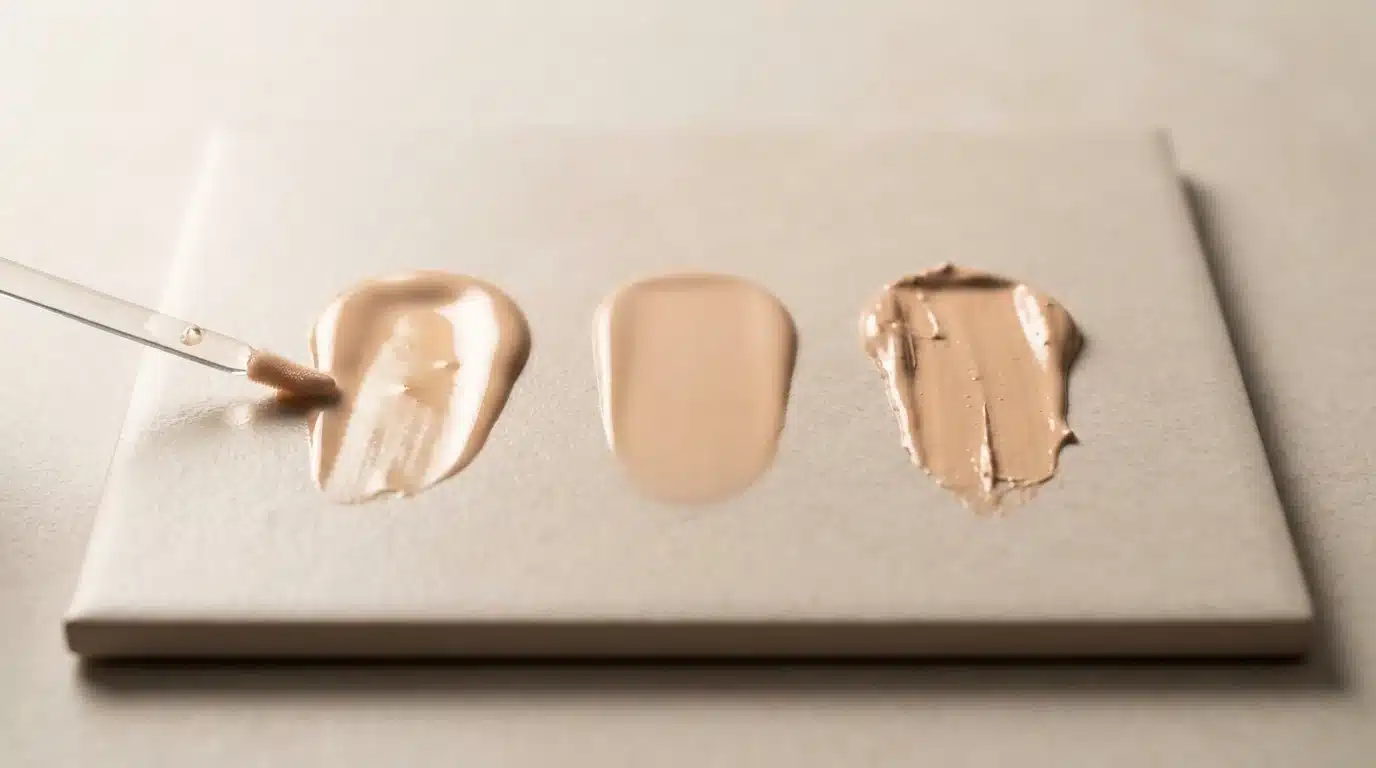
Beyond Foundation: Holistic Habits for Smoother Skin
You can own the most expensive foundation on the market, but its performance is ultimately dictated by the canvas underneath. The underrated factor in achieving a crease-free finish is not another primer; it is your daily habits. Thinking about skin health holistically means recognizing that diet, sleep, and hydration directly influence skin texture and elasticity.
Nutrition plays a significant role. According to research published in the Journal of the American Academy of Dermatology, diets rich in antioxidants and healthy fats can help protect the skin’s collagen. This means incorporating foods like salmon, avocados, and leafy greens can actively improve your skin’s resilience. Dr. Anjali Mahto, a London-based dermatologist, explains that “what you eat directly impacts skin inflammation and structure.”
But how much does your sleep schedule really affect your concealer? A lot, surprisingly. During sleep, your skin’s blood flow increases, and the organ rebuilds its collagen and repairs damage from UV exposure—an eight-hour sleep cycle is your skin’s best friend.
Hydration is non-negotiable.
Trying to apply foundation on dehydrated, stressed skin is like trying to paint a wall without sanding it first; the final result will always betray the poor prep work. A well-hydrated, healthy complexion provides a smoother surface, allowing makeup to sit on top of the skin rather than settling into fine lines. This focus on skin health is central to achieving the latest soft glam makeup looks that prioritize a natural, radiant finish.
Ultimately, these lifestyle adjustments are a long-term investment, creating a foundation of health that no cosmetic product can replicate.
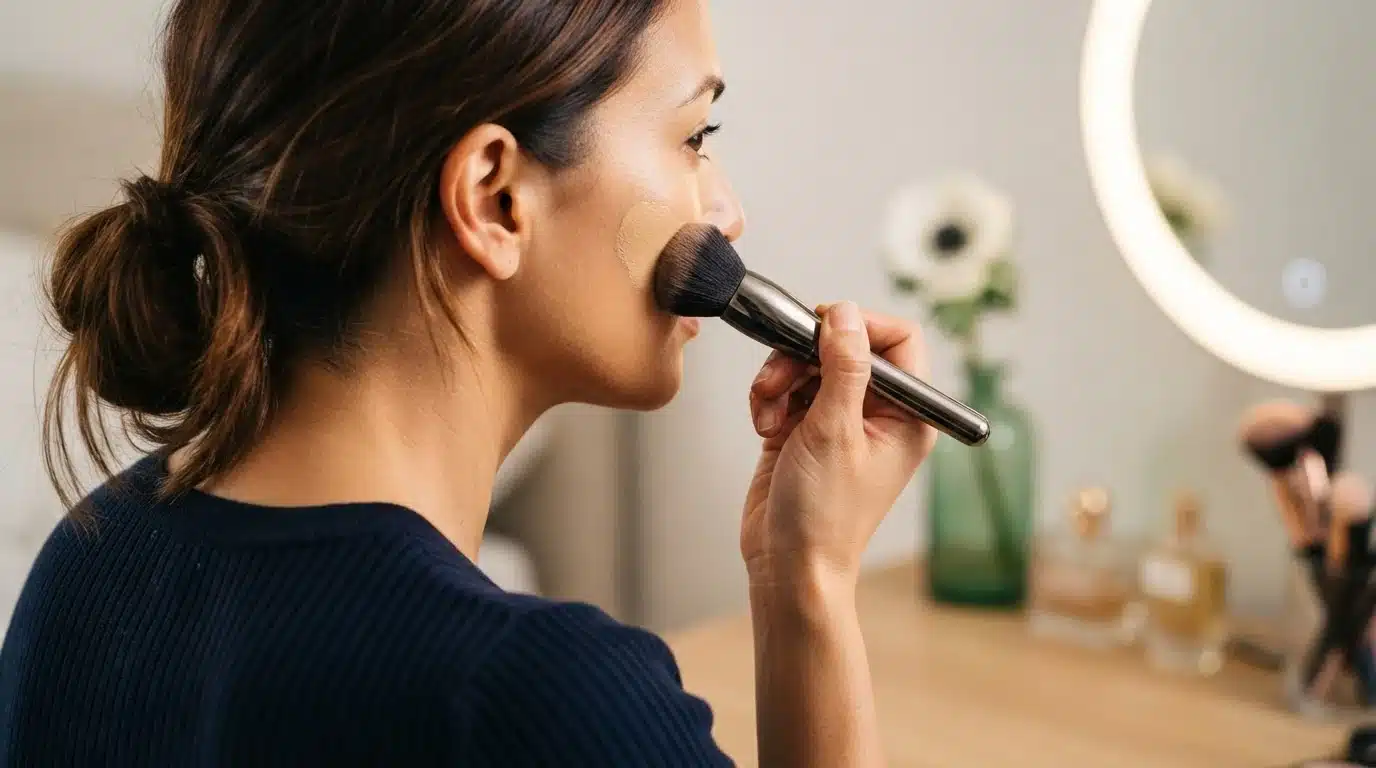
Your Next Step: A Foundation Audit
You now have the blueprint for a flawless base, one built on synergy between skin and makeup. But knowledge without action is just trivia. Instead of overhauling your entire routine at once, which can be overwhelming, commit to a simple audit. For the next week, change just one variable. Maybe it’s waiting a full ten minutes after applying your moisturizer, or perhaps it’s switching from a swiping motion to a stippling technique with your current foundation. By isolating a single change, you can directly observe its impact. This small experiment will do more for your makeup application than buying another ‘miracle’ product ever could. What will your first test be?
Frequently Asked Questions
Can certain ingredients in foundation make fine lines more noticeable?
Absolutely. Ingredients like denatured alcohol can dry out the skin, exacerbating fine lines. heavy, oil-based formulas with thick binders are more prone to settling and caking, which magnifies skin texture rather than blurring it.
Is primer always necessary to prevent foundation from settling?
While not always mandatory with excellent skin prep, a primer is a highly effective tool. Its main role is to create a smooth barrier between skin and makeup. A well-chosen primer that matches your foundation’s base (water or silicone) can significantly improve texture and longevity.
What are common mistakes people make when applying foundation that leads to creasing?
The most frequent errors include applying too much product, using aggressive rubbing or swiping motions, and not allowing skincare to fully absorb before makeup application. These mistakes force pigment into lines and cause pilling and separation.
How often should I update my foundation routine for aging skin?
It’s beneficial to re-evaluate your routine at least twice a year, or as the seasons change. Skin’s hydration and texture needs evolve, so a foundation or technique that worked in the humid summer may not perform as well in the dry winter. Pay attention to how your skin feels and adjust accordingly.
Are there specific tools that are better for applying foundation on skin with fine lines?
Yes, a damp makeup sponge is ideal for pressing foundation into the skin for a fluid, hydrated finish while absorbing any excess product. For more controlled coverage, a dense, flat-top kabuki brush used in a stippling (tapping) motion works beautifully to build layers without dragging the skin.