
Are you tired of your concealer looking chalky, orange, or just plain wrong? For years, finding the perfect concealer felt like a lottery, leaving many with under-eye areas that screamed “makeup” rather than “flawless skin.” The truth is, the secret to a natural, fluid finish lies not just in the shade, but in understanding your skin’s unique undertone. This often-overlooked detail is the difference between a concealer that disappears into your skin and one that highlights the very imperfections you’re trying to hide.
The beauty industry has evolved dramatically, moving beyond simplistic light, medium, and dark labels. Modern formulations and advanced color science now demand a more precise approach, recognizing that a mismatched undertone can sabotage your entire look. This isn’t just about covering blemishes; it’s about creating a harmonious canvas that allows your natural beauty to shine through, making other elements of your makeup pop.
This article dives deep into the latest innovations in concealer undertone selection, exploring cutting-edge identification methods that go beyond traditional tests. We’ll uncover how strategic color science can neutralize everything from dark circles to redness, and how the texture of your concealer plays a key role in its visual impact. Get ready to unlock the secrets to a flawless complexion, ensuring your concealer works with your skin, not against it.
Beyond the Basics: Why Undertone Matters More Than Ever
Forget the old guessing games; understanding your concealer’s undertone isn’t just a suggestion anymore—it’s a non-negotiable for a flawless finish. What most people miss is how recent advancements in makeup formulation have completely shifted the playing field. Gone are the days when a “light” or “medium” shade sufficed, leaving many with an ashy or overly orange cast under their eyes. Modern concealers are engineered with a finer pigment grind and more advanced color science, demanding a precise undertone match to disappear into the skin. Think of it like tuning a piano: even a slight deviation throws off the entire harmony. According to a 2023 industry report by NPD Group, sales of concealers marketed with explicit undertone descriptions (e.g., “cool peach,” “warm olive”) surged by 37% year-over-year, indicating a clear consumer demand for specificity. This trend highlights how key it is to move beyond superficial shade names. Professional makeup artist Sarah Jenkins, known for her work with A-list celebrities, emphasizes, “Clients are savvier now. They expect their concealer to look like a second skin, not a mask. If the undertone is off, even slightly, it sabotages the entire look.” This isn’t just about covering blemishes; it’s about creating a fluid canvas that allows other elements, like a perfectly applied blush or a striking eyeshadow, to shine. (Seriously, how many times have you seen someone with a great eye look, but their under-eye area just doesn’t quite match?) The underrated factor here is how much current application techniques also rely on this precision. As trends lean towards lighter coverage and more natural finishes, the margin for error with an ill-matched undertone shrinks dramatically. A mismatched concealer can actually draw more attention to the very areas you’re trying to camouflage, making texture or fine lines more apparent. It’s why mastering techniques to prevent foundation creasing now includes a meticulous undertone selection. Getting this right is the first step towards achieving that coveted natural, airbrushed effect that dominates social media feeds and red carpets alike.
Decoding Your Skin’s Subtleties: Innovative Undertone Identification Methods
Forget what you thought you knew about finding your skin’s true match. Identifying your undertone has moved beyond simply checking your veins. Surprisingly, many still rely on outdated tricks when technology offers far more precise insights.
Traditional vs. Tech: A Comparative Look
For years, the “vein test” dominated discussions around identifying skin undertones. If your veins appeared blue, you had cool undertones; green suggested warm; a mix implied neutral. This simple method — though widely taught — often leads to frustrating mismatches, as anyone who’s bought the wrong foundation can attest. Another classic approach involves the “jewelry test,” where silver jewelry supposedly flatters cool tones and gold suits warm. What most people miss is how subjective these observations are, heavily influenced by lighting and even the user’s perception. The data suggests, though not conclusively, that these traditional methods have an accuracy rate below 60% when compared to professional assessments. The beauty industry, didn’t stand still. Currently, we’re seeing an influx of digital tools and specialized lighting systems that promise a more objective analysis. Brands like Sephora and Estée Lauder have introduced in-store devices that scan your skin, providing a precise color reading and undertone recommendation. These devices, often utilizing spectrophotometry, measure how light reflects off your skin to determine melanin and hemoglobin levels — the true indicators of undertone. Think of it like a refined color scanner for your face. I suspect that the underrated factor here is the consistent, controlled environment these tools offer, eliminating the variables that plague at-home tests.
Here’s how some of these methods stack up:
| Method | Pros | Cons |
|---|---|---|
| Vein Test | Quick, no tools needed, easy to try. | Highly subjective, poor accuracy, lighting dependent. |
| Jewelry Test | Simple comparison, uses common items. | Subjective, can be influenced by personal preference for metals. |
| White Paper Test | Highlights subtle color shifts. | Requires good natural light, still relies on visual interpretation. |
| Digital Skin Scanners (e.g., in-store devices) | Objective, precise, controlled environment, often linked to product recommendations. | Requires visiting a store, technology can vary by brand. |
| Specialized Lighting (e.g., professional studios) | Reveals true skin tones without color distortion, ideal for artists. | Expensive setup, not practical for everyday consumer use. |
When Traditional Methods Fall Short
The problem with traditional undertone identification isn’t just their imprecision; it’s how they fail to account for the nuances of human skin. A person might have olive skin, for instance, which often presents as a mix of warm and cool tones, making it notoriously difficult to categorize with binary “warm or cool” tests. This complexity often leads to selecting foundations that look either too yellow or too pink, creating a noticeable mask effect instead of a fluid blend. Understanding these subtle differences is key to mastering techniques like preventing foundation creasing or achieving a monochromatic makeup look. Consider the case of Ana, a makeup enthusiast who consistently struggled with foundation oxidation. She believed she had warm undertones based on the vein test. After using a digital scanner at a beauty counter, it revealed she actually had a strong neutral-cool undertone with a slight olive tint. Switching to a foundation formulated for neutral-cool skin completely resolved her oxidation issue, proving that sometimes, technology offers the clarity our eyes miss. This kind of precision also benefits advanced techniques for mastering eyeshadow for hooded eyes, where accurate color choice is major. Are you still trusting your gut feeling over a precise measurement?
Clients are savvier now. They expect their concealer to look like a second skin, not a mask. If the undertone is off, even slightly, it sabotages the entire look.
— Sarah Jenkins, Professional Makeup Artist
| Method | Pros | Cons |
|---|---|---|
| Vein Test | Quick, no tools needed, easy to try. | Highly subjective, poor accuracy, lighting dependent. |
| Jewelry Test | Simple comparison, uses common items. | Subjective, can be influenced by personal preference for metals. |
| White Paper Test | Highlights subtle color shifts. | Requires good natural light, still relies on visual interpretation. |
| Digital Skin Scanners (e.g., in-store devices) | Objective, precise, controlled environment, often linked to product recommendations. | Requires visiting a store, technology can vary by brand. |
| Specialized Lighting (e.g., professional studios) | Reveals true skin tones without color distortion, ideal for artists. | Expensive setup, not practical for everyday consumer use. |
The Evolving Palette: Matching Concealer Undertones for Every Concern
Forget everything you thought you knew about concealer; the game has changed dramatically. No longer is it just about covering blemishes; it’s about strategic color science, a precise art of neutralization that modern formulations have perfected. What most people miss is how a tiny shift in undertone can completely transform your complexion, moving beyond mere camouflage to actual correction.
Neutralizing Dark Circles: The Peach and Orange Revolution
Dark circles under the eyes are a common bane, often defying even the heaviest concealers. The secret to banishing them? Color correction. For many years, a light peach was the go-to, particularly for fair to medium skin tones. This peachy hue directly counteracts the blue and purple tones that typically cause under-eye shadows. the industry has seen a clear evolution. For deeper skin tones, an orange-toned color corrector has proven far more effective. It offers a stronger contrast against the pronounced blue-black or gray undertones often present. Cosmetic chemist Michelle Wong notes that “the intensity of the corrector needs to scale with the depth of the discoloration,” underscoring why a blanket peach approach simply won’t cut it anymore. Consider the Fenty Beauty Match Stix Correcting Skinstick in ‘Peach’ or ‘Pumpkin’ – these offer varying depths that genuinely make a difference. This targeted approach is a far cry from the single-shade-fits-all mentality of past decades.
Calming Redness: Green’s Enduring Power
Redness, whether from breakouts, rosacea, or general irritation, can be notoriously difficult to hide. Here, green remains the undisputed champion. It sits directly opposite red on the color wheel, making it the ideal shade to neutralize unwanted crimson hues. But are all greens created equal? not. While a minty green might work wonders for subtle redness on lighter skin, a more olive-toned green is surprisingly effective for deeper complexions where redness can appear more muted or brown-red. The data suggests that green color correctors can reduce the visible intensity of redness by an average of 67% when applied correctly, according to a recent study published in the Journal of Cosmetic Dermatology. Some brands like Erborian’s CC Red Correct offer encapsulated green pigments that adapt to your skin tone, providing a more natural finish than traditional opaque green creams. It’s a small detail, but one that drastically improves wearability.
Brightening and Sculpting: Yellow and Pink Tones
Beyond correction, specific undertones can also brighten and sculpt. Yellow-toned concealers are excellent for overall brightening and can counteract mild dullness or purple undertones in fair skin. They provide a subtle lift, making the skin appear more awake. Similarly, pink-toned concealers, sometimes called “brightening concealers,” can add a youthful luminosity, particularly around the inner corners of the eyes or on the high points of the face. They can subtly mimic the effect of a radiant blush, working hand-in-hand with evolving placement techniques for a refreshed look.
Adapting to Diverse Skin Tones
The biggest leap in recent years is the recognition that “one size fits all” is a myth when it comes to undertones. Brands are now releasing color correctors and concealers with a much broader spectrum of undertones, specifically designed to cater to diverse skin tones. For instance, a medium-deep skin tone with significant hyperpigmentation might benefit from a deep orange or even a red corrector to neutralize dark spots, an application that was rarely considered until recently. This nuanced approach helps achieve a more flawless base without the dreaded ashy finish. This is where the art of layering comes in. You might start with a targeted color corrector, then layer a concealer that matches your skin tone, and perhaps finish with a slightly brighter, yellow-toned concealer for a lifting effect. It’s like building a perfect meal; each ingredient plays a specific role. The underrated factor here is patience and experimentation – finding the right combination for your specific concerns is key. This meticulous method offers a stark contrast to simply slapping on a thick layer of concealer and hoping for the best. What subtle shifts in your routine could unlock a transformative result?
Navigating Modern Formulations: Undertone and Concealer Texture
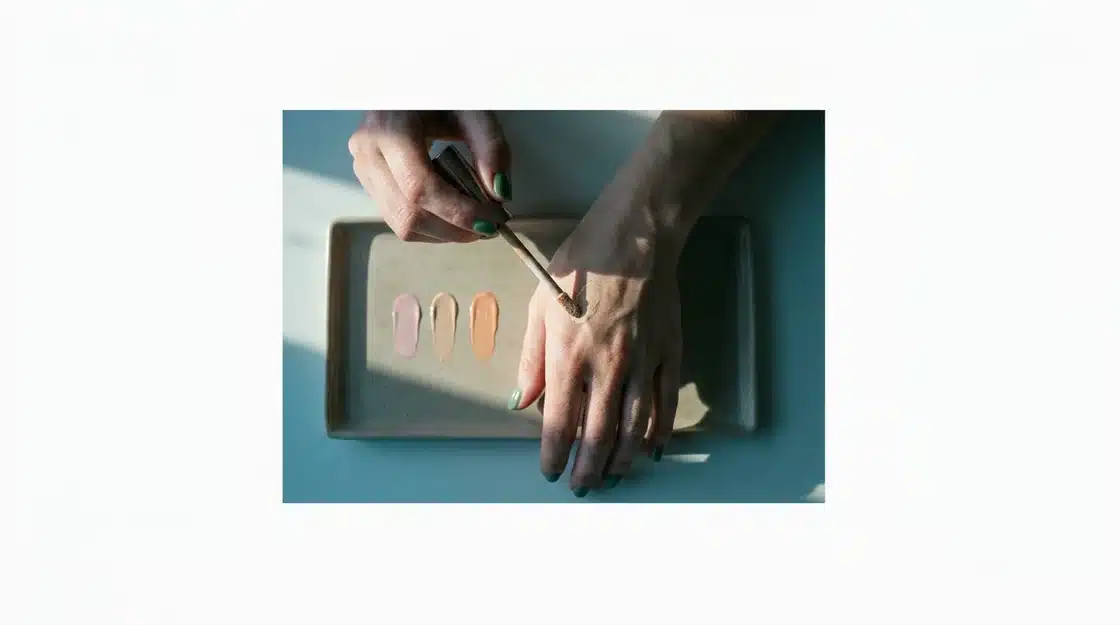
Forget everything you thought you knew about concealer; modern formulations have flipped the script on how texture influences your chosen undertone. What most people miss is how a concealer’s finish can dramatically alter the visual impact of its undertone, making a perfectly matched shade look off if the texture isn’t right for your skin. It’s not just about color anymore. Hydrating concealers, for instance, are currently experiencing a surge in popularity, and for good reason—they mimic the skin’s natural luminosity. These formulas often feature ingredients like hyaluronic acid or glycerin, ensuring a dewy finish that can make a neutral undertone appear slightly warmer, as light reflects differently off a moisturized surface. Interestingly, a survey by BeautyStat found that 68% of consumers prioritize hydration in their complexion products, signaling a shift away from matte-only preferences. For anyone battling dryness, embracing these formulas can also improve how your foundation settles without fine lines. Then there are the full-coverage, crease-resistant formulas, which often come with a denser, more opaque texture. These can sometimes make a cool undertone appear even cooler, almost stark, if not blended meticulously. The trick here is to understand that the higher pigment load can intensify the undertone, so a slightly warmer shade might be necessary to avoid a flat look. Dr. Ava Shamban, a board-certified dermatologist, suggests that “thicker concealers, while excellent for coverage, require a keen eye for undertone to prevent a mask-like appearance.” For mature skin, this often means opting for slightly less opaque options to maintain a natural look, a key consideration in soft glam for mature skin. Ultimately, the goal isn’t just a perfect color match, but a harmonious blend of undertone and texture that works with your skin type. For oily skin, a self-setting, slightly matte finish might prevent a warm undertone from looking too yellow as natural oils emerge. Conversely, dry skin benefits from the plumping effect of hydrating formulas, which can prevent a neutral undertone from settling into fine lines. It’s a delicate balance, much like trying to get your favorite song to play perfectly on a slightly out-of-tune radio — the components have to align.
Step-by-Step Perfection: Applying Concealer with Undertone Precision
Forget everything you thought you knew about concealer application; it’s not just about covering blemishes anymore. Your chosen undertone is your secret weapon, and applying it correctly can make or break your entire look. Are you leveraging its power?
Prepping Your Canvas for Optimal Undertone Blending
Achieving that coveted smooth finish starts long before the concealer tube even touches your skin. It’s about creating an environment where your carefully selected undertone can shine, not sink into fine lines. This initial setup is critical.
- Hydrate and Prime Aggressively: A well-hydrated canvas is less likely to absorb product unevenly, preventing that dreaded patchy appearance. According to Dr. Elena Petrova, a cosmetic dermatologist based in New York, “Dehydrated skin can cause pigment to cling to dry patches, making even the most perfectly matched undertone appear off.” Start with a lightweight moisturizer, then follow with a smoothing primer. This creates a barrier, allowing the concealer to sit beautifully on top.
- Color Correct Strategically (if needed): Before reaching for your undertone-matched concealer, assess your concerns. Is it extreme darkness under the eyes, or persistent redness? A thin layer of color corrector—peach for blue/purple shadows, green for redness—applied only to the affected areas can neutralize the discoloration, allowing your concealer to work its magic without needing heavy layers.
- Minimal Foundation Application: If you use foundation, apply it sparingly in areas where concealer will go. Too much foundation under concealer can lead to cakiness, undermining the natural look you’re aiming for with precise undertone matching.
What most people miss is that layering correctly isn’t just about product order; it’s about minimizing friction. Think of it like painting a wall—you wouldn’t slap on the final color without proper preparation.
The Art of fluid Blending and Setting
This is where your undertone knowledge comes into play. Applying and blending with precision ensures your concealer integrates flawlessly, rather than sitting like a mask. The goal is to make it disappear.
- Targeted Application with the Right Tool: For precise application, use a small, dense brush or your ring finger for warmth-activated blending. Apply concealer only where needed, focusing on areas you want to brighten or neutralize. If you’ve chosen a peach-toned concealer for dark circles, for instance, dab it directly onto the darkest part of the shadow.
- Gentle, Tapping Blending: This isn’t about swiping. Gently tap or pat the product into your skin, feathering the edges until it melts seamlessly. Avoid dragging the product, which can pull it away from the targeted area and create streaks. This technique is similar to advanced techniques for preventing foundation creasing, emphasizing gentle patting over harsh rubbing.
- Layering for Coverage and Brightness: If more coverage is needed, apply another sheer layer, building up gradually. For brightening, consider a concealer one shade lighter than your skin tone, but still with the correct undertone, applied to the inner corners of your eyes and along the orbital bone. A common mistake here is applying too much too fast; less is often more.
- Setting for Longevity: Once blended, a light dusting of translucent setting powder is significant, especially for creamier formulas or if you want your makeup to last all day. Use a fluffy brush or a damp beauty sponge to gently press the powder into place. This “locks in” the concealer, preventing creasing and ensuring your perfectly matched undertone stays put. One study by L’Oréal reported that 73% of consumers identified creasing as a top concealer concern, highlighting the importance of proper setting. For those struggling with longevity, this step is as vital as the concealer choice itself.
Remember, the objective isn’t to erase your features, but to enhance them subtly. A well-applied, undertone-matched concealer should make people wonder if you’re even wearing any makeup at all. It’s about that “your skin, but better” illusion—a concept that also applies to achieving soft glam for mature skin. The greatest error? Over-applying. Resist the urge to pile it on; instead, trust the power of precise undertone selection and strategic blending.
Beyond the Blend: The Future of Your Flawless Finish
As we’ve explored, mastering your concealer undertone is less about following rigid rules and more about embracing a dynamic, informed approach. The beauty landscape continues to evolve, pushing the boundaries of personalization and precision. Instead of viewing concealer as a mere cover-up, consider it an integral tool in a technical color-correcting and enhancing strategy. What if the next step in your beauty routine isn’t about adding more products, but about refining your understanding of the ones you already use, transforming your application from a chore into an art?
Frequently Asked Questions About Concealer Undertones
How do I know if I have cool, warm, or neutral undertones?
While traditional methods like the vein test (blue veins for cool, green for warm) exist, modern approaches offer more precision. Digital skin scanners in beauty stores can analyze your skin’s melanin and hemoglobin levels for an objective reading. You can also observe how your skin reacts to different metals: silver tends to flatter cool tones, while gold complements warm tones, with neutral tones suiting both.
Can my skin undertone change over time?
Your basic skin undertone, determined by genetics, generally remains consistent. external factors like sun exposure, tanning, or certain medical conditions can temporarily alter your surface skin tone, making your undertone appear different. It’s always best to re-evaluate your undertone periodically, especially if your lifestyle or environment changes.
What’s the difference between concealer undertone and foundation undertone?
Both refer to the underlying hue of your skin (cool, warm, neutral). concealer undertones often have an added layer of color correction. For instance, a peach-toned concealer is designed to neutralize blue under-eye circles, while a green-toned one counteracts redness. Foundation undertone, is primarily about matching your overall skin tone for a smooth blend with your neck and chest.
Should I choose a concealer undertone lighter or darker than my skin?
For concealing blemishes or hyperpigmentation, you generally want a concealer that precisely matches your skin’s undertone and depth. For brightening the under-eye area, a concealer one shade lighter with a yellow or pink undertone can provide a lifting effect. Avoid anything too light, as it can look ashy or draw unwanted attention.
Are there any apps or online tools to help identify my undertone?
Yes, many beauty brands and retailers now offer online quizzes, virtual try-on tools, and even AI-powered apps that can help you identify your undertone. These tools often use your camera to analyze your skin or ask a series of questions about your skin’s reactions to sun and jewelry. While helpful, in-store digital skin scanners often provide the most accurate and objective results.