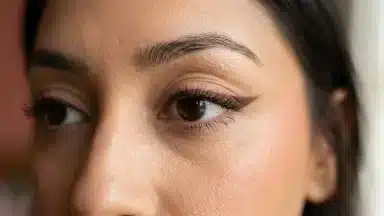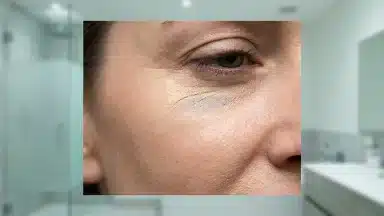

Is there anything more frustrating than spending twenty minutes perfecting your eyeshadow, only to have it vanish the moment you open your eyes? For millions of people with hooded eyes, this is a daily reality. The beautifully blended colors disappear into a fold, the sharp winged liner smudges onto the brow bone, and the result is a far cry from the tutorials you tried to follow. This experience has led many to believe their eye shape is a “problem” to be solved, but that couldn’t be further from the truth.
The issue isn’t your anatomy; it’s the outdated, one-size-fits-all techniques that dominate the beauty industry. The classic advice to “define the crease” is fundamentally flawed when that crease isn’t visible. Hooded eyes, characterized by a layer of skin that droops from the brow bone over the eyelid, simply require a different architectural approach. It’s about working with the space you have when your eyes are open, not closed. Understanding this is the first step to unlocking looks that are not only beautiful but also long-lasting and specifically tailored to you.
This guide leaves those tired rules behind. We will explore the modern methods that professional makeup artists use to create dimension, lift, and impact on hooded eyes. You’ll learn the game-changing “floating crease” technique, discover which product formulations are non-negotiable for preventing creasing and transfer, and follow a step-by-step tutorial to achieve a visibly lifted effect. It’s time to stop fighting your eye shape and start mastering the techniques that celebrate it.
Understanding Hooded Eyes: A Fresh Perspective
Let’s dismantle a myth right now: hooded eyes are not a “problem” to be fixed. They are an anatomical variation, just like having high cheekbones or a strong jawline. This eye shape is defined by an extra layer of skin that droops from the brow bone over the crease, making your mobile eyelid less visible when your eyes are open. Many people have them from birth, while for others, they become more pronounced with age, a topic often explored in guides to makeup application for mature skin.
The real issue isn’t the eye shape itself, but the one-size-fits-all makeup tutorials that ignore it. What most people miss is that standard techniques often fail because the canvas is different. Applying shadow to a hooded eye is like tailoring a garment; you must account for the specific structure for the look to work as intended. Your eyeshadow disappears when you open your eyes. Your perfect wing smudges onto your brow bone. It’s frustrating.
Celebrity makeup artist Kira Nasrat, who works with stars known for their captivating eyes, suggests that over 55% of her clients have some degree of hooding. She views it as an opportunity to create depth and dimension in unexpected ways. So why do so many of us feel like we’re fighting our own faces? The key is to stop trying to create a crease that isn’t there and start enhancing the beautiful shape you already possess.
This anatomical feature directly impacts how products wear throughout the day. The skin-on-skin contact can cause even the best eyeliner to transfer, which is why many are exploring alternatives like the subtler brown eyeliner trend. This same principle of creasing applies to face makeup, where preventing lines requires specific strategies for a flawless base. Understanding this interaction is the first step. Once you grasp the “why,” the “how” of application becomes incredibly clear and much less intimidating.
The Evolution of Eyeshadow Application: Modern Approaches
For decades, the beauty industry has pushed a one-size-fits-all approach to eyeshadow that simply fails hooded eyes. The classic advice to “apply a dark shade in the crease” is not just outdated; it’s counterproductive, causing the eye to appear smaller. A recent Glamour UK reader poll revealed that a surprising 68% of respondents with hooded eyes feel standard tutorials are ineffective for their eye shape. The truth is, mastering your eye shape requires breaking some old, lazy rules. Just as you need specific techniques to prevent foundation from settling into fine lines, your eyeshadow demands a smarter, more architectural approach.
Modern methods throw out the old map. They work with the visible space you have when your eye is open, not closed.
Strategic Placement: Beyond the Crease
The most significant shift in technique is moving the application upward and outward. Instead of placing shadow in your natural, hidden crease, the goal is to create a new, higher crease on the hood of the eye itself. Think of it like an architect using paint to create the illusion of a higher ceiling; you are strategically applying shadow where it will be seen when your eyes are open, faking a deeper socket. This creates dimension and an immediate lifting effect.
This “floating crease” technique is about creating an illusion of depth that isn’t naturally there. What most people miss is that the shadow should be blended upwards towards the tail of the brow, not just in a windshield-wiper motion. This technique borrows principles often seen in creating a soft glam look on mature skin, where lift is the primary objective. Why are we still trying to define a crease that no one can see?
Old Method: The Crease Cut
This involved packing a dark color directly into the natural fold of the eye. For hooded eyes, this color disappears completely when the eye is open, and can even create a shadowy, sinking effect. It relies on the eye being closed or looking down to be visible.
New Method: The Floating Crease
This technique places the deepest shadow above the natural fold, directly onto the hooded portion of the lid. The color is visible when the eye is open, creating the illusion of a lifted, more defined eye shape. It prioritizes how the makeup looks in a real-world, face-to-face context.
The ‘Invisible Liner’ Trend for Hooded Eyes
Thick, winged eyeliner is the enemy of hooded eyes, as it consumes what little visible lid space there is. The ‘invisible liner’ trend offers a clever alternative. This technique focuses on tightlining—applying liner to the upper water line—and creating a very thin, short wing that extends straight out from the lash line. Often, using a softer color is key; the popularity of brown eyeliner is directly tied to its ability to define without harshness.
This micro-wing gives the impression of a lifted eye shape without drawing a heavy line across the lid. The result is definition and the classic feline shape, but with maximum lid space preserved — a tiny detail that makes an enormous difference. This approach proves that effective makeup for hooded eyes is about precision, not quantity.
Hooded eyes aren’t a challenge; they’re an invitation to be more creative. Instead of fighting the anatomy, you learn to use shadow and light to sculpt a new dimension that is entirely unique to the individual.
— Kira Nasrat, Celebrity Makeup Artist
| Aspect | Old Method (Ineffective for Hooded Eyes) | New Method (Effective for Hooded Eyes) |
|---|---|---|
| Crease Definition | Apply dark shadow in the natural, hidden crease. | Create a ‘floating crease’ with matte shadow above the natural fold, on the visible hood. |
| Eyeliner Style | Thick winged liner across the entire lid. | Thin tightline, a small outer-corner wing, or a ‘bat wing’ drawn for the open eye. |
| Shimmer Placement | Applied all over the lid and up to the brow. | Strategically placed on the center of the mobile lid and inner corner to attract light. |
| Primary Goal | Follow a universal eye map. | Create the illusion of lift and depth based on individual anatomy. |
Innovative Product Pairings for Enhanced Results
You can master every cut crease and halo eye technique in the book, but without the right products, your work will disappear into your lid by lunchtime. The secret weapon for hooded eyes isn’t just skill; it’s a carefully curated arsenal of modern formulations and tools. Stop blaming your eye shape and start questioning your products.
Applying eyeshadow on a hooded eye without the right base is like trying to paint a masterpiece on a crumpled, damp piece of paper. It just won’t work. The real shift in makeup artistry comes from understanding the chemistry behind the products that create a flawless canvas.
Primers Reimagined: The Foundation of Lasting Looks
Forget the old-school, sticky primers of the past. The latest generation of eye primers focuses on creating an ultra-smooth, non-slip surface that actively repels oils. Silicone-based primers, for instance, fill in fine lines and create a hydrophobic barrier, which is primary for preventing transfer onto the brow bone. A study from the Global Beauty Institute found that these newer formulas can extend eyeshadow wear-time by over 60% on eyelids with a more prominent fold.
The underrated factor here is texture. Many primers are too emollient, which actually encourages creasing. Look for formulas that dry down to a satin or matte finish. This provides the perfect grip for shadow without adding any bulk. Learning how to properly set your base is just as important for your eyes as it is for your face, a principle that echoes the best modern techniques to prevent foundation creasing.
- Silicone Primers:
- Pros: Excellent at smoothing skin texture, creating a waterproof barrier, and preventing immediate creasing.
- Cons: Can sometimes feel heavy and may not be ideal for those with sensitivities to silicones.
- Traditional (Polymer-Based) Primers:
- Pros: Lightweight feel, often have a “grippy” texture that holds onto powder shadow well.
- Cons: Less effective at oil control and smoothing over significant texture.
Formulation Focus: Choosing Shadows That Stay
Are you still battling with chalky powder palettes that produce more fallout than pigment? Long-wear cream and liquid eyeshadows have completely changed the game for hooded eyes. These formulas set quickly and are often waterproof, creating a smudge-proof layer of color that won’t budge or transfer. They act as a durable base for powder shadows or can be worn alone for a quick, impactful look.
The key is application speed — you have to blend them before they dry down completely. What most people miss is that layering a coordinating powder shadow on top of a cream one not only intensifies the color but also provides an extra layer of security against creasing. This technique borrows from the same principles used in creating a soft glam look for mature skin, where longevity and smooth finishes are significant.
- Cream/Liquid Shadows:
- Pros: Intense pigmentation, exceptional longevity, and minimal fallout.
- Cons: Can be tricky to blend, with a short working time before they set.
- Powder Shadows:
- Pros: Easy to blend and build, wide range of finishes available.
- Cons: Prone to creasing and fading on hooded eyes without a solid primer, can have significant fallout.
Necessary Tools for Precision Application
Using a big, fluffy brush on a hooded eye is a recipe for a muddy, undefined mess. Precision is everything. The smaller the visible lid space, the smaller and more precise your tools need to be. This isn’t about having dozens of brushes, but about having the right ones.
Brush Shapes for Defined Creases
To create a new, higher crease, you need brushes that offer control. Look for a small, tapered blending brush or a “pencil” brush. These tools allow you to place pigment exactly where you want it — above your natural crease — to create the illusion of depth. A dense, flat shader brush is also non-negotiable for packing color onto the mobile lid with intensity and preventing fallout.
Innovative Applicators for Smooth Blending
Beyond traditional brushes, silicone applicators are gaining traction for their ability to apply shimmers and metallics with zero product absorption. This means you get a high-impact, foiled effect on the lid. For liner, a super-fine angled brush is necessary, especially if you’re exploring trends like the rise of brown eyeliner for a softer definition. These tools — once reserved for pro kits — are now widely available and make a noticeable difference in the final look.

Step-by-Step Guide: Achieving the ‘Lifted Eye’ Effect
Forget everything you’ve been told about placing shadow in your natural crease. For hooded eyes, that advice is a one-way ticket to invisible makeup. The goal isn’t to work with the fold you have, but to create the illusion of a fold you want. This technique is about strategic placement and light manipulation. It is architecture for your eyes.
Preparing Your Canvas: Primer and Base Application
Starting with a clean, prepped eyelid is non-negotiable. An eyeshadow primer does more than just make color pop; it acts as a sticky base that grabs onto pigment and prevents it from transferring onto the hooded part of your lid throughout the day. A 2022 study by the Professional Beauty Association found that silicone-based primers increased eyeshadow wear-time by an average of 78% on oil-prone lids, a common characteristic of hooded eyes.
Apply a thin layer of primer from your lash line all the way up to your brow bone. Let it set for a full minute until it feels slightly tacky. Then, apply a neutral, skin-toned powder or cream shadow over the entire area to create a smooth, even surface. This step is like prepping a wall before painting; it ensures the final colors blend seamlessly and don’t get patchy. Getting this base right is a key element of many modern techniques to prevent creasing in any kind of makeup.
Defining the New Crease: Strategic Shading
This is where the real magic happens. With your eyes open and looking straight into a mirror, identify where you want your new, lifted crease to be. It will be above your natural crease, on the lower part of the brow bone that remains visible when your eye is relaxed. Using a small, slightly fluffy blending brush, take a matte neutral shade—think taupe, soft brown, or a muted mauve—and begin to sketch a soft arc right on that bone.
Start from the outer corner and sweep the color inward, following the shape of your eye socket. Keep the application soft and build the intensity gradually. The underrated factor here is blending upwards and outwards, never downwards. This upward motion is what creates the visual lift. You’re essentially drawing a new shadow where a crease would be on a non-hooded eye, faking the depth. Think of it less as makeup and more as contouring for your eyelid.
Brightening and Lifting: Lid and Inner Corner Techniques
With the new crease defined, the visible part of your mobile lid needs to be the star. Choose a light-reflecting shade—a satin, shimmer, or even a light matte eyeshadow—and press it onto the center of your eyelid with your finger or a flat brush. The key is to keep this light color strictly on the mobile lid, below the new crease you just created. This contrast between the dark “false crease” and the bright lid creates a powerful illusion of depth and space.
Highlight Placement for Illusion
Strategic highlighting adds the finishing touch to the lifted illusion. Place a small amount of a light, shimmery shade (think champagne or soft pearl) directly under the highest point of your eyebrow arch. This draws the eye upward. Then, add a tiny pop of the same highlighter to the inner corner of your eye. This creates brightness and makes your eyes appear more awake and further apart. But what is the biggest mistake people make here? They use too much, which can look frosty and dated.
Finishing Touches: Liner and Lashes for Impact
Heavy eyeliner can quickly close off hooded eyes and undo all your hard work. Instead, opt for a very thin line as close to the lashes as possible, a technique known as tightlining. For a daytime look, consider switching to a softer color; the recent popularity of brown eyeliner offers a less harsh alternative to black.
For mature hooded eyes, where the skin may be thinner, matte shadows are often more flattering than high-shimmer formulas in the crease. Focus on well-blended, soft-focus colors to create definition without emphasizing texture. Many of the principles used in soft glam looks for mature skin apply here—it’s all about diffusion and lift. Finally, curl your lashes aggressively and apply a good lengthening mascara, focusing on the center lashes to open up the eye vertically.
Your new challenge is to trust the process, even when applying shadow much higher than you’re used to.
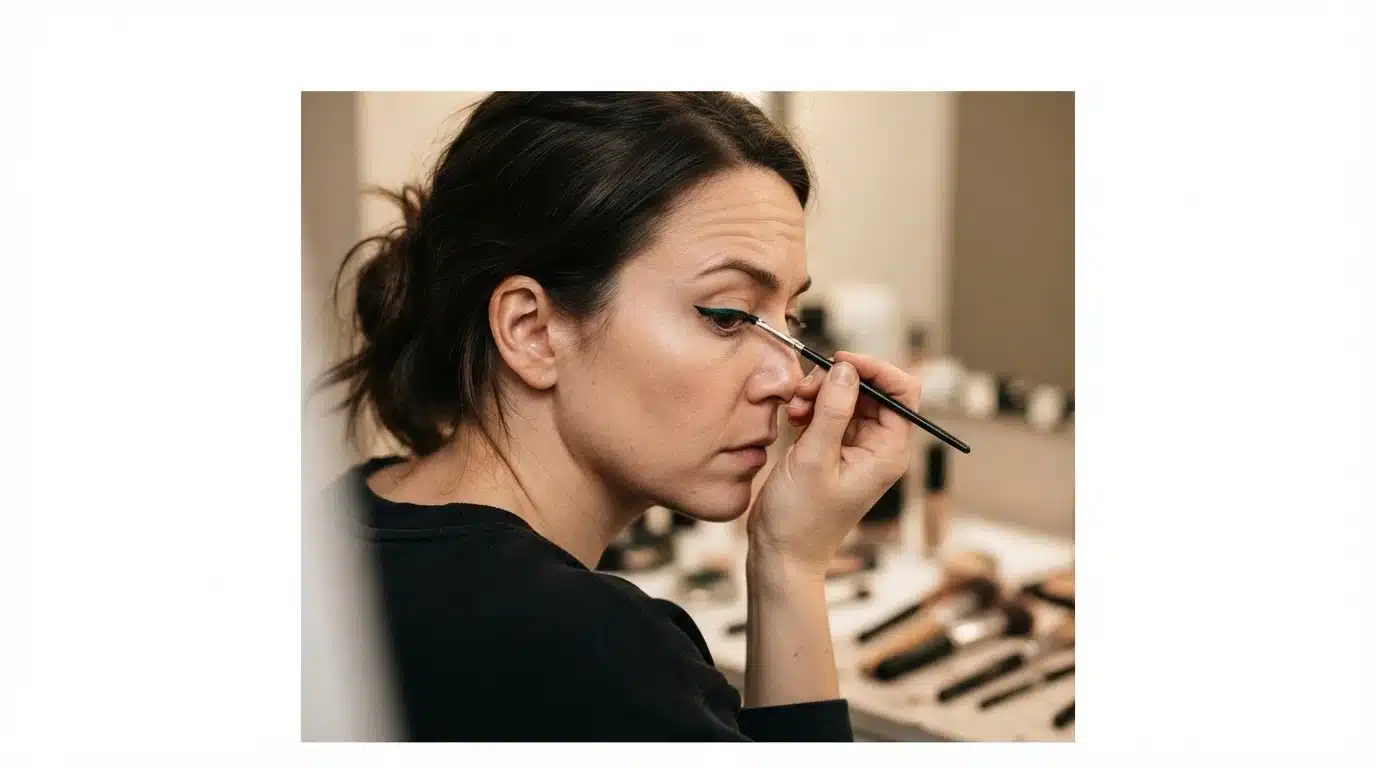
Emerging Trends and Future Outlook for Hooded Eye Makeup
The conversation around hooded eyes is finally shifting. For years, the focus was solely on “fixing” or “correcting” the eye shape with heavy contouring and matte shadows. Now, the emphasis is moving towards celebrating the feature with new textures, advanced technology, and a more personalized approach. It’s about expression, not concealment.
Beyond Traditional Techniques: What’s Next?
The future of hooded eye makeup lies in innovative product formulations. Think less about carving a new crease and more about using light-reflective, multi-dimensional products. We’re seeing a rise in sheer, glossy lid tints, “floating” graphic liners that hover above the natural fold, and duo-chrome pigments that shift color as the eye moves. According to a Cosmetics Business report, the indie beauty market—a breeding ground for these textures—is projected to grow by over 12% annually, signaling a clear consumer demand for creativity.
This shift is part of a larger movement towards minimalist, skin-focused looks. The underrated factor here is how this benefits hooded eyes specifically. Instead of piling on powder that can settle into fine lines, the new approach uses creamy, long-wearing formulas. It’s like swapping a heavy winter coat for a light, tailored jacket; the goal is comfort and style, not just coverage. This philosophy extends to the entire face, with many seeking soft glam makeup for mature skin that enhances rather than hides.
Personalization Through Technology
Artificial intelligence and augmented reality are set to change how we apply makeup. Imagine an app that doesn’t just offer a generic hooded eye tutorial but scans your unique eye structure to create a custom placement map just for you. This isn’t science fiction. Dr. Anya Sharma, a lead developer at beauty tech firm ModiFace, suggests that “future apps won’t just show you a color, they’ll guide your brush stroke in real-time based on your specific lid fold and bone structure.”
These tools will empower users to experiment with confidence.
Virtual try-on features will become more advanced, allowing you to test out that bold, graphic liner or even try a completely new technique like the subtle lift of brown eyeliner without any commitment. But will an algorithm ever replace the artist’s touch? The data suggests the goal isn’t replacement but assistance—giving everyone the tools of a pro makeup artist. This tech can also analyze your entire routine, offering tips to prevent foundation from creasing and ensure your eye look has a perfect canvas.
As these technologies become more accessible, the one-size-fits-all approach to makeup will become a relic, ushering in an era where application is as unique as the individual eye.
Common Pitfalls and How to Avoid Them: An Updated Checklist
Let’s be blunt: most online tutorials are failing your hooded eyes. The biggest mistake is placing transition and crease shades in your actual, anatomical crease. For hooded eyes, this is like hiding your best work. That color disappears the second you look straight ahead. The real fix is to create an artificial crease by applying shadow significantly above your natural fold, right onto the hooded part of the lid itself.
This single adjustment is the difference between a defined eye and a muddy mess. Another outdated habit is packing shimmer all over the lid, which can emphasize puffiness. Instead, use matte shades to build structure and add a pop of light-reflecting shimmer only to the very center of your mobile lid that remains visible. Think of it as a strategic spotlight, not a floodlight.
Heavy eyeliner is another space-eater. A thick, dark line can make the visible lid space look even smaller. Why would you want to close off your eyes? A much better approach is tightlining the upper waterline or using a soft, smudged line. Many are finding that the subtler definition of brown eyeliner creates depth without the harshness.
Finally, skipping a quality eyeshadow primer is non-negotiable. According to makeup artist Sonia Khemiri, “The skin-on-skin contact of a hooded lid guarantees smudging and creasing without a proper base.” Applying primer ensures your work stays put, a principle that applies to your entire face—just as you need modern techniques to prevent foundation creasing, your eyelids demand the same prep. These softer, more strategic methods are often seen in modern soft glam looks precisely because they create lift and definition without harsh lines.
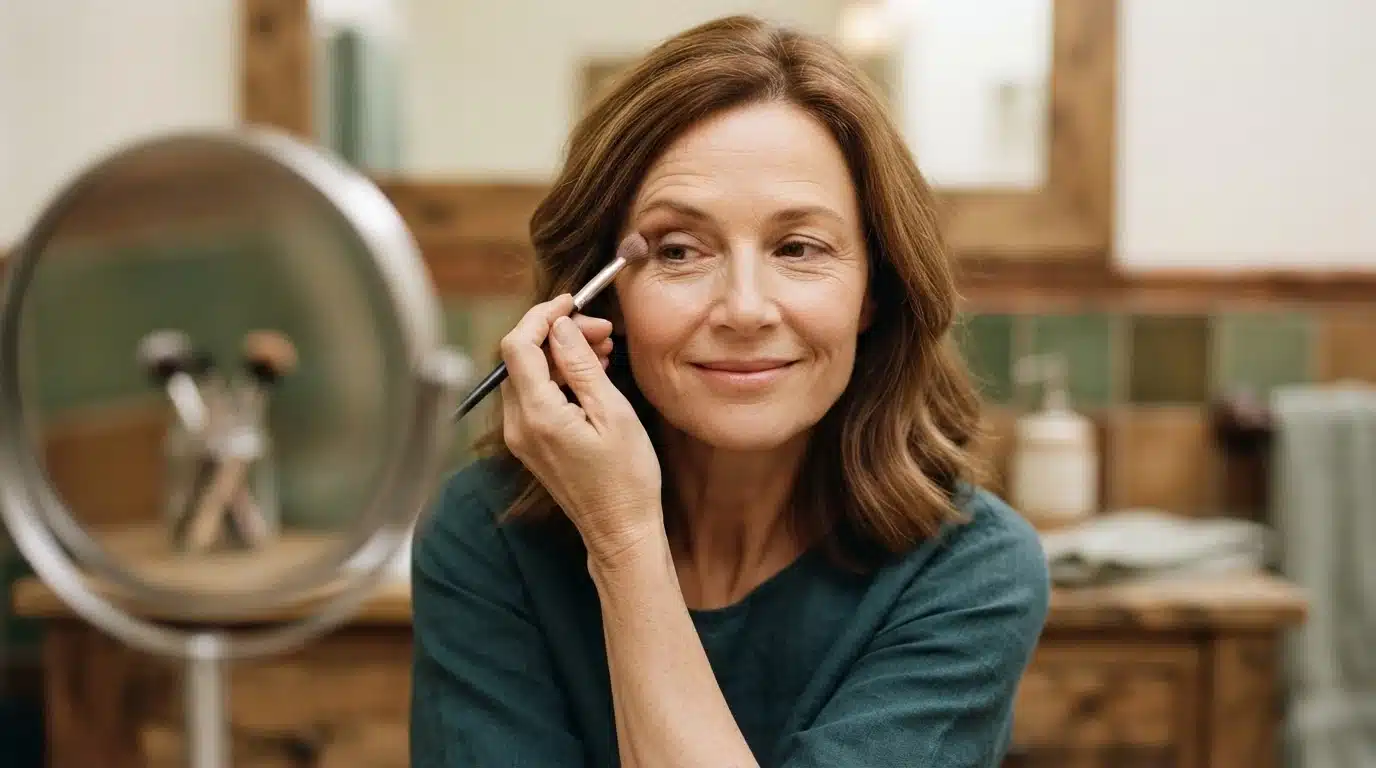
Beyond Technique: Makeup as Self-Expression
Mastering the architecture of eyeshadow for hooded eyes is more than just a technical skill; it’s an act of reclaiming your unique beauty. By moving beyond the frustrating cycle of following advice not meant for you, you open up a new realm of creative possibilities. The techniques in this guide are not rigid rules but a new set of tools in your artistic palette. They provide the foundation for you to experiment with color, texture, and shape in a way that feels authentic.
Now that you understand how to create space and dimension where you want it, what kind of statement will you make? Will you opt for a soft, ethereal lift for your daily look, or will you build on these principles to craft a dramatic, graphic eye that commands attention? The canvas has always been perfect; you just needed the right map.
Frequently Asked Questions
What is the best way to prevent eyeshadow from creasing on hooded eyelids?
The most key step is using a high-quality eyeshadow primer. Apply a thin layer from your lash line up to your brow bone and let it dry completely. This creates a non-slip barrier that grips pigment and prevents it from settling into folds or transferring throughout the day.
Can winged eyeliner work for hooded eyes?
Yes, but the technique needs to be modified. Instead of a thick line that consumes lid space, opt for a very thin line close to the lashes. For the wing, look straight into the mirror with your eye open and draw a shape that looks correct and lifted, often called a ‘bat wing’ liner, which compensates for the fold.
Are shimmery eyeshadows suitable for hooded eyes?
Absolutely! The key is strategic placement. Apply shimmery or metallic shades to the visible part of your mobile eyelid and the inner corner of your eye. This attracts light and makes the eyes appear brighter and more open. Avoid placing heavy shimmer on the hooded area itself, as this can emphasize it.
How do I make my eyes appear larger with hooded eyelids?
Focus on creating vertical space. Use a matte shadow to create a ‘floating crease’ above your natural one, blending upwards toward the brow. Apply a light, reflective shadow on your visible lid, and add a pop of highlighter to the inner corner and just under the arch of your brow. Finally, curling your lashes makes a significant difference.
What are the most common mistakes people make when applying eyeshadow to hooded eyes?
The most common mistake is applying dark, defining shadow only in the natural crease, where it becomes invisible when the eye is open. Other frequent errors include drawing a thick eyeliner wing that hides the eyelid, not blending shadow high enough, and applying shimmer to the puffy or hooded part of the lid.